Guides
Is Georgia safe for tourists in 2026?
Yes. Georgia is safe for tourists who take ordinary care: the UK government calls crime levels low, the US gives Georgia its lowest warning level, and Tbilisi rates safer than Paris, London or Rome in Numbeo's 2026 crime survey. The real risks in 2026 are evening protests outside Parliament in Tbilisi, overcharging by airport drivers and some nightclubs, fast driving on country roads and avalanche closures on mountain passes in winter, and the one area to stay out of is the occupied regions of Abkhazia and South Ossetia. In an emergency call 112, which answers in English and Russian.
How safe is Georgia compared with the rest of Europe?
Georgia has less everyday crime than most big European destinations. In Numbeo's crime index for mid-2026, a survey of how safe residents and visitors feel, Tbilisi scored 26, against 58 for Paris, 55 for London, 52 for Barcelona and 47 for Rome, close to Prague at 25. Batumi scored 20, from fewer replies. Lower means safer.
Official figures point the same way. Georgian police registered 54,134 crimes in 2025, 8% more than in 2024, and the Interior Ministry puts the rise down to more drug cases being detected. Murders, burglaries, robberies and fraud all fell. The latest UN homicide figure for Georgia, from 2019, is about 2 per 100,000 people a year, below the world average of 5.2 and the US rate of 5.8, though above France (1.3) and the UK (1.1).
The UK government's advice on Georgia puts it in four words: crime levels are low. For visitors the more common problems are petty theft, overcharging and the roads, all covered below.
What do the UK, US and other travel advisories say in 2026?
No major government advises against travel to Georgia as a whole. The UK, the US, Canada and EU countries warn about the same two things, the protests in central Tbilisi and the occupied regions of Abkhazia and South Ossetia.
- UK, Foreign Office, updated 15 September 2026. Calls crime levels low. Advises against all travel to Abkhazia and South Ossetia and against all but essential travel right next to their boundary lines. No other part of Georgia carries a warning. Warns that protests at Parliament can escalate without warning, especially on Saturday evenings and on political anniversaries.
- US, State Department. Level 1, Exercise normal precautions, the lowest of four levels, in the advisory reissued on 13 March 2025. Abkhazia and South Ossetia are Level 4, Do not travel.
- Canada, updated 27 August 2026. Normal security precautions for Georgia, and a high degree of caution in Tbilisi because of demonstrations and clashes between security forces and protesters. Avoid the occupied regions and everything within 5 km of their boundary lines, except the E60 highway.
- Belgium, updated 5 October 2026. Travel in Georgia is generally safe with the usual precautions. Joining protests can bring high fines, and people suspected of taking part can be refused entry.
- Read your own government's page before you go. Travel insurance may not pay for a trip made against its advice.
Is it safe to visit Tbilisi during the protests?
Yes, if you keep your distance. Since 28 November 2024 protesters have gathered every evening outside Parliament on Rustaveli Avenue in Tbilisi, and on 17 October 2026 the count reached day 689. On weekday evenings in October 2026 the crowd was about 100 to 150 people. Larger marches take place on Saturday evenings, and smaller daily protests continue in Batumi and Kutaisi.
Most evenings pass peacefully, but tension can rise quickly. On 4 October 2025 a group tried to break through to the presidential palace, and police used water cannon, pepper spray and tear gas. We found no reports of tear gas or water cannon at the Tbilisi protests in 2026. Since 6 November 2025 police have not let protesters block Rustaveli Avenue.
Expect bigger crowds on dates with political meaning.
Rustaveli Avenue is also closed to cars between Tamar Chovelidze Street and Freedom Square for renovation. The works began on 23 July 2026 and are expected to last until the end of November, so taxis cannot drop you at the door on that stretch.
- Do not join the protests or watch from inside the crowd. Since October 2025, blocking a road, covering your face or carrying fireworks at a rally can mean up to 15 days in detention, and a repeat offence is a crime with up to a year in prison. Since December 2025 blocking a pavement counts too.
- Foreigners can be expelled. Georgian courts may expel foreigners for offences at rallies and ban them from returning. In October 2025 a Russian citizen got 14 days in detention and was expelled with a two-year ban for blocking the road. The UK warns that participants may be questioned when they leave or refused re-entry, and that unpaid fines can stop you leaving Georgia.
- Plan evening walks around Parliament, especially on Saturdays, and follow police instructions.
- You do not need to avoid hotels on Rustaveli Avenue. The daily rally stays in front of Parliament, mostly in the evening. If you want quiet evenings, Old Tbilisi near the sulphur baths, Vera or Vake are further away.
- Check the news on the day. Civil.ge and the public broadcaster 1tv.ge publish in English.
How do I avoid the taxi scam at Tbilisi Airport?
Book your car in an app or before you fly, and say no to anyone who offers a ride in the arrivals hall at Tbilisi Airport, even if they say they drive for Bolt. Bolt, Yandex Go and Maxim all work at the airport, and a ride to the centre usually costs 25 to 35 GEL by day and 30 to 40 GEL after midnight. Drivers who approach you in the hall usually ask 50 to 100 GEL.
The tricks repeat. A driver says Bolt does not work at the airport, that the app price is only a starting fare, or asks you to cancel your order and pay him cash instead. None of this is true. A real Bolt driver waits in the car outside and does not come looking for you in the hall. Bolt shows its pick-up point in the app and asks riders to check that the colour, make and driver of the car match the app before getting in. How the scam works and which apps to use are in our guide to taxis in Georgia.
The official airport taxi outside arrivals charges a fixed 40 GEL to the centre, according to the airport's website in October 2026, so confirm the fare before you get in. Canada's advice adds that unofficial taxis usually have no meter.
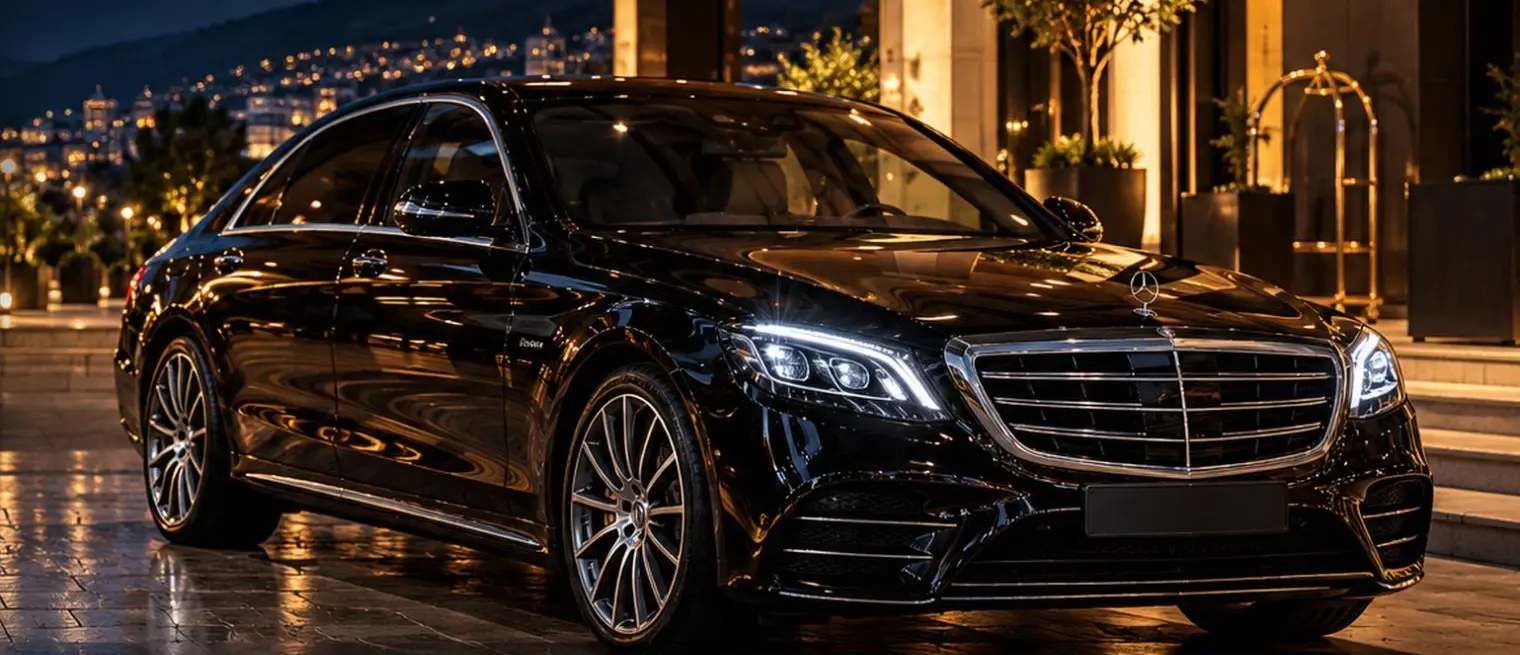
If you land at night, with children or with a lot of luggage, a transfer booked in advance takes the bargaining away. The driver waits in arrivals with a name sign, the price is fixed per car, the first 60 minutes of waiting are free, and you pay the driver after the ride. See the Tbilisi Airport transfer, and every option with prices in our guide from Tbilisi Airport to the city.
Which scams and petty crime should I watch for in Tbilisi and Batumi?
The scam that costs tourists most in Tbilisi is the nightclub bill. A woman met on a dating app, or someone who approaches you in the street, suggests a bar. Drinks are ordered without prices, the bill runs to hundreds or thousands of lari, and staff press you to pay, sometimes walking you to an ATM.
Georgian police have broken up several such rings in Tbilisi. They arrested 13 people at two clubs in March 2022, 8 in June 2023 in a scheme where taxi drivers brought tourists to a club, 15 at several nightclubs in October 2024 and 6 in April 2025. In a 2021 case a tourist lost consciousness after a drink and found 15,000 GEL gone from his account. The police cases we found are all in Tbilisi, but the same advice holds in Batumi's summer nightlife.
Pickpockets work in crowds, on the metro and buses, in Old Tbilisi, at markets and at rallies. In 2023 the US Embassy twice warned about groups of young pickpockets on Rustaveli Avenue and around Freedom Square in Tbilisi.
- Choose the bar yourself, check prices on the menu before you order, and do not run an open tab or hand over your card.
- Buy your own drinks and keep them in sight. The UK government reports drink spiking in Georgia.
- If staff press you to pay a bill you did not agree to, call 112 on the spot. The police cases above were prosecuted as coercion and extortion.
- Keep your phone and wallet in a front pocket or a closed bag on the metro, in crowds and on busy streets.
Is Georgia safe for solo women travellers?
Georgia is generally safe for women travelling alone who take the same care as anywhere in Europe. Canada's advice, updated in August 2026, says women alone may face some harassment or verbal abuse and that sexual assaults have occurred. In travellers' reports, unwanted attention from men is the most common complaint.
In Numbeo's 2026 survey, walking alone at night rates as high safety in Tbilisi (70 out of 100) and in Batumi (77). Georgian society is conservative, especially outside the cities, and in churches women cover their hair, shoulders and knees. Many churches lend scarves and wrap skirts at the door.
- After dark take Bolt, Yandex Go or a booked car rather than a street taxi, sit in the back and share the trip with a friend.
- Avoid empty streets and parks late at night, as you would at home.
- Do not hike remote mountain routes alone. Go with a guide or a group, and tell your guesthouse where you are going.
Are Georgia's roads and mountains safe?
The roads are the biggest risk in Georgia. In 2025, 469 people died on Georgian roads, 129 per million people, almost three times the EU average of 44, and a third of them were pedestrians.
The main highways are in good shape, but driving is fast and impatient, with overtaking on blind bends, sudden lane changes, cattle on the road and dark country roads at night. The UK and Canadian advisories both warn about driving after dark outside the cities. As a pedestrian, cross with the lights and do not count on cars stopping at a zebra crossing. If you plan to drive, read our guide rent a car or hire a driver in Georgia.
In the mountains the risk is the weather. From December to March the Georgian Military Road between Gudauri and Kobi, over the Jvari Pass at 2,379 m, closes whenever the avalanche risk is high, for a few hours or several days, and in winter 2025/26 several closures lasted two to four days. Snow is not cleared at night, and winter tyres are compulsory from Mleta to Kobi from 1 December to 1 March. How to check the road is in our guide to Kazbegi in winter.
The UK calls off-piste skiing in Georgia very dangerous, says avalanche information is hard to get and warns that rescue may be slow. Trails are not always marked and the weather changes fast, so take a guide on high routes, carry a charged phone and install the 112 Georgia app. Magti usually has the best coverage in the mountains.
If you would rather not drive mountain roads in winter, our drivers do. In winter the cars run on winter tyres, and if the authorities close the road we tell you at once and reschedule or cancel without charge. See the Tbilisi to Kazbegi transfer and the Kazbegi and Military Road tour.
Can tourists visit Abkhazia and South Ossetia?
Not from Russia, and most governments advise against going at all. Georgia and most other countries regard Abkhazia and South Ossetia as Georgian territory occupied by Russia. Under Georgia's Law on Occupied Territories, foreigners may enter them only from the Georgian side, from Zugdidi municipality for Abkhazia and Gori municipality for South Ossetia, and from the Georgian side the crossings are closed to most visitors.
Entering Abkhazia or South Ossetia from Russia, for example over the Psou crossing south of Sochi, is a criminal offence under Georgian law. The UK warns of heavy fines or up to 4 years in prison, and says stamps of the self-declared authorities may be treated as proof of illegal entry when you later come to Georgia.
The UK advises against all travel to both regions and all but essential travel next to the boundary lines, the US rates them Level 4, and Canada advises staying 5 km away from the lines, except on the E60 highway. The lines are often unmarked, people are still detained near the South Ossetia line, as the EU Monitoring Mission noted in September 2026, and there is a risk from landmines and unexploded weapons.
Everything most tourists see, from Tbilisi, Mtskheta, Kazbegi and Kakheti to Borjomi, Kutaisi, Svaneti and Batumi, lies outside these regions. The E60 highway from Tbilisi to Kutaisi passes close to the South Ossetia line near Gori and is an ordinary road, just do not leave it towards the line. More on the rules in our guide to Georgia's entry requirements.
How are Russian, Indian and other visitors treated in Georgia?
Georgia receives visitors from everywhere, a record 5.5 million international tourist visits in 2025, but attitudes towards Russians are mixed, and the UK warns that harassment based on race does take place.
Russian citizens made about 1.6 million visits to Georgia in 2025, more than any other nationality, and Russian is widely understood. Opinion is divided. In a 2024 Caucasus Barometer survey, 42% of Georgians viewed the Russians who moved to Georgia after 2022 negatively, 36% neutrally and 14% positively, while 56% approved of doing business with Russians. Anti-Russian graffiti and signs, and some bars refusing Russian customers, have been reported since 2022. The 2008 war and the occupied regions are painful subjects, so avoid political arguments and stay away from the protests. What Russian visitors need at the border and for money is in our guides to Upper Lars and entry requirements.
For Indian travellers the more common problem is the border, not the street. Officers can refuse entry, so carry your e-visa or your qualifying US, UK, EU or Gulf visa or residence permit, hotel bookings, a return ticket, the compulsory insurance and recent bank statements. The details are in our entry requirements guide.
Visitors of colour should know that the UK says harassment and assault based on race does take place in Georgia. Same-sex relationships are legal, but the UK notes they are not widely accepted and that showing affection in public may lead to harassment. If anything happens, call 112.
Who do I call in an emergency in Georgia?
Call 112 for police, ambulance and fire anywhere in Georgia. The number is free, works around the clock, even from a phone without a SIM card, and operators answer in English, Russian, Georgian, Turkish, Armenian and Azerbaijani.
The free 112 Georgia app adds chat and a silent SOS button, and deaf and hard-of-hearing callers can use text and video. For a theft, a scam or an accident, call 112 rather than looking for a police station, and the patrol police will come to you.
Since 1 January 2026 every foreign tourist must have health and accident insurance of at least 30,000 GEL for the whole stay. Keep the policy and the insurer's assistance number on your phone.
Save your embassy's emergency number before you travel. The US, the UK and most EU countries have embassies in Tbilisi. Russia has no embassy in Georgia, and the Interests Section of the Russian Federation at the Swiss Embassy in Tbilisi handles consular matters.
Street dogs are common in Georgian towns and villages. Do not pet them. Rabies occurs in Georgia, so after any bite or scratch wash the wound and see a doctor the same day.
Questions and answers
Is it safe to travel to Georgia right now?
Yes, for most visitors. The UK says crime levels are low and advises against travel only to the occupied regions of Abkhazia and South Ossetia, and the US rates Georgia Level 1, its lowest level. Keep away from the evening protests outside Parliament in Tbilisi.
Is Tbilisi safe at night?
Generally yes. In Numbeo's 2026 survey Tbilisi rates high for walking alone at night. Use Bolt or Yandex Go rather than street taxis, keep away from the rally outside Parliament and watch your drink in bars.
Should I avoid hotels on Rustaveli Avenue because of the protests?
There is no need. The daily rally stays in front of Parliament, mostly in the evening. Expect crowds and noise there on Saturday evenings, and choose Old Tbilisi, Vera or Vake if you want quiet nights.
Can tourists join or watch the protests in Tbilisi?
It is safer not to. Blocking a road or a pavement can mean up to 15 days in detention, courts can expel foreigners, and the UK warns that participants may be refused re-entry to Georgia.
Is Georgia safe for Russian tourists?
Russians made about 1.6 million visits in 2025, more than any other nationality. Attitudes are mixed and anti-Russian graffiti exists, so avoid political arguments, do not join protests and do not enter Abkhazia or South Ossetia from Russia.
Is Georgia safe for solo female travellers?
Generally yes, with normal care. Canada warns of possible harassment and verbal abuse. Use app taxis after dark, avoid empty streets late at night and do not hike remote routes alone.
Is the Georgian Military Road safe in winter?
Yes when it is open and the car has winter tyres. From December to March the Jvari Pass between Gudauri and Kobi closes when the avalanche risk is high, sometimes for several days, so check the Roads Department notices before you leave.
What is the emergency number in Georgia?
112 for police, ambulance and fire. It is free, works without a SIM card, and operators speak English and Russian.
Plan the trip
The transfer and the tour from this article, at a fixed price per car. Questions go to WhatsApp or Telegram.
More guides
 Airport
Taxis in Georgia in 2026, which app to use and when to book a transfer
Which taxi apps work in Tbilisi, Batumi, Kutaisi and the mountains in 2026, real fares, the fake Bolt scam at Tbilisi Airport, card or cash, and child seats.15 min read Guide
How much money you need for Georgia in 2026
Daily budgets for Georgia in 2026 in lari and dollars, totals for 5, 7 and 10 days, hotels, food, transport, tours, insurance, cash, cards and tips.17 min read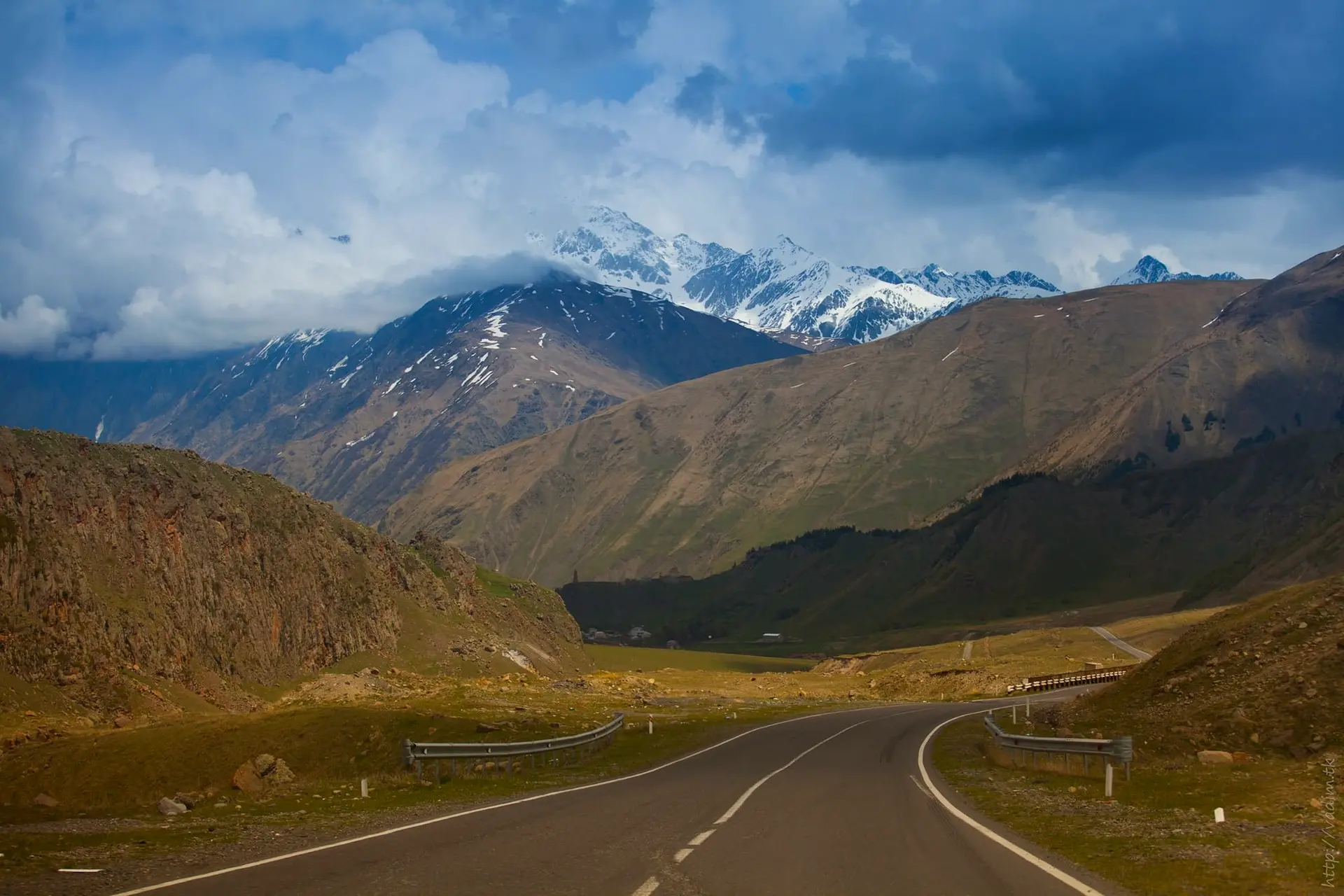 Guide
Renting a car in Georgia or taking a car with a driver
Car rental prices, deposits and insurance in Georgia in 2026, licence rules, fuel, fines and mountain roads, and when a car with a driver is better.15 min read
Photos: Diego Delso (CC BY-SA 4.0).