Guides
What to do in Tbilisi in winter
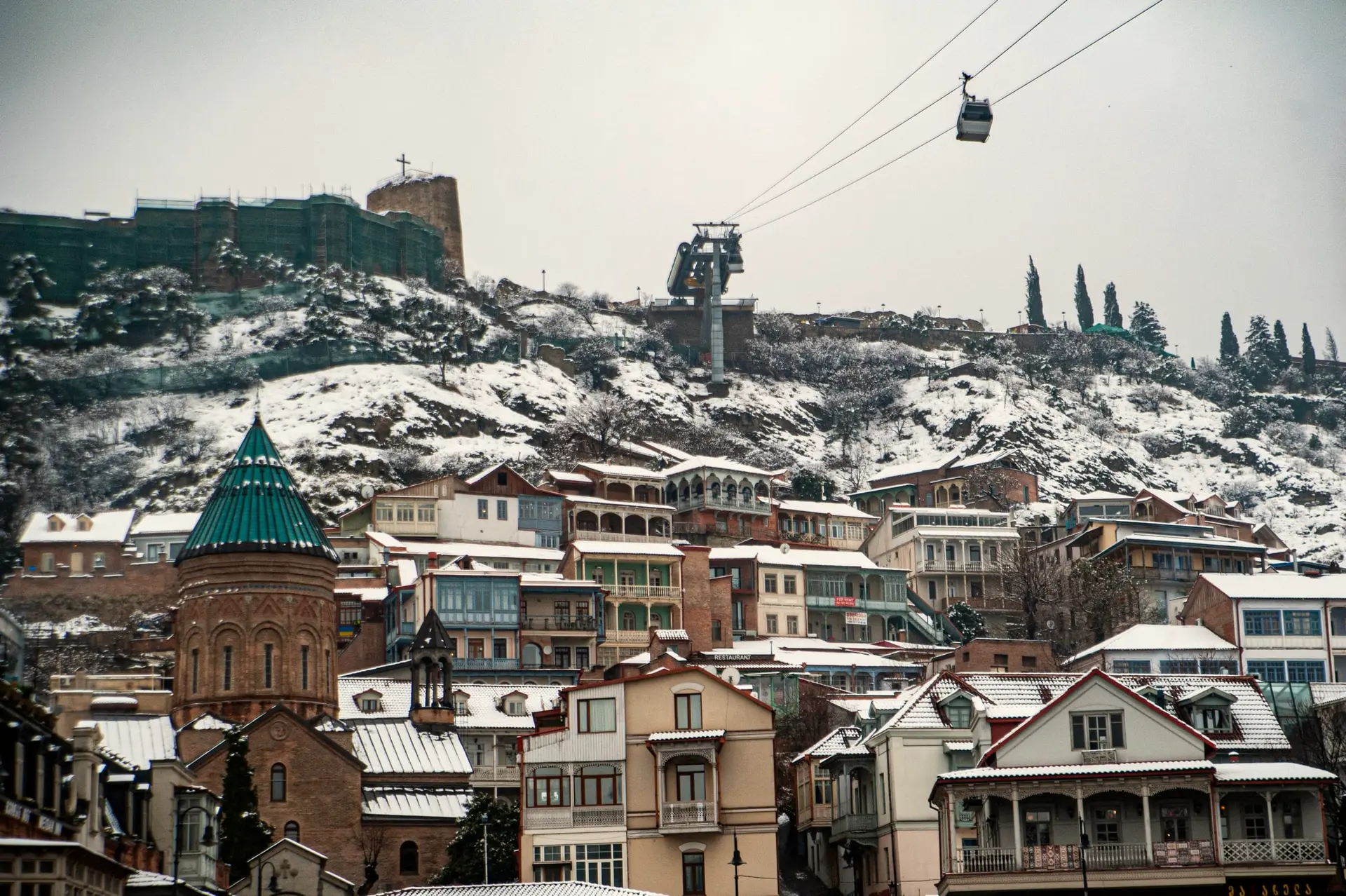
Winter in Tbilisi is mild and quiet. Days are around 7 to 8 °C, snow is rare and it gets dark at about half past five. It is the best season for the sulphur baths, and museums, theatre and wine bars fill the grey afternoons.
Weather from December to February
Winters here are fairly dry. On average it is 8 °C by day and 1 °C at night in December, 7 °C and around 0 °C in January, and 8 °C and around 0 °C in February. Frosty nights are common, and the wind along the river makes it feel colder. Rain or snow falls on about four days a month.
Snow comes a few times each winter, mostly in January and February, and rarely stays long in the centre. The sun sets at about 17:30 in December, 17:55 in mid-January and 18:35 in mid-February.
- A warm coat, a hat and gloves for the evenings.
- Shoes with a good grip.
The sulphur baths, how they work and what they cost
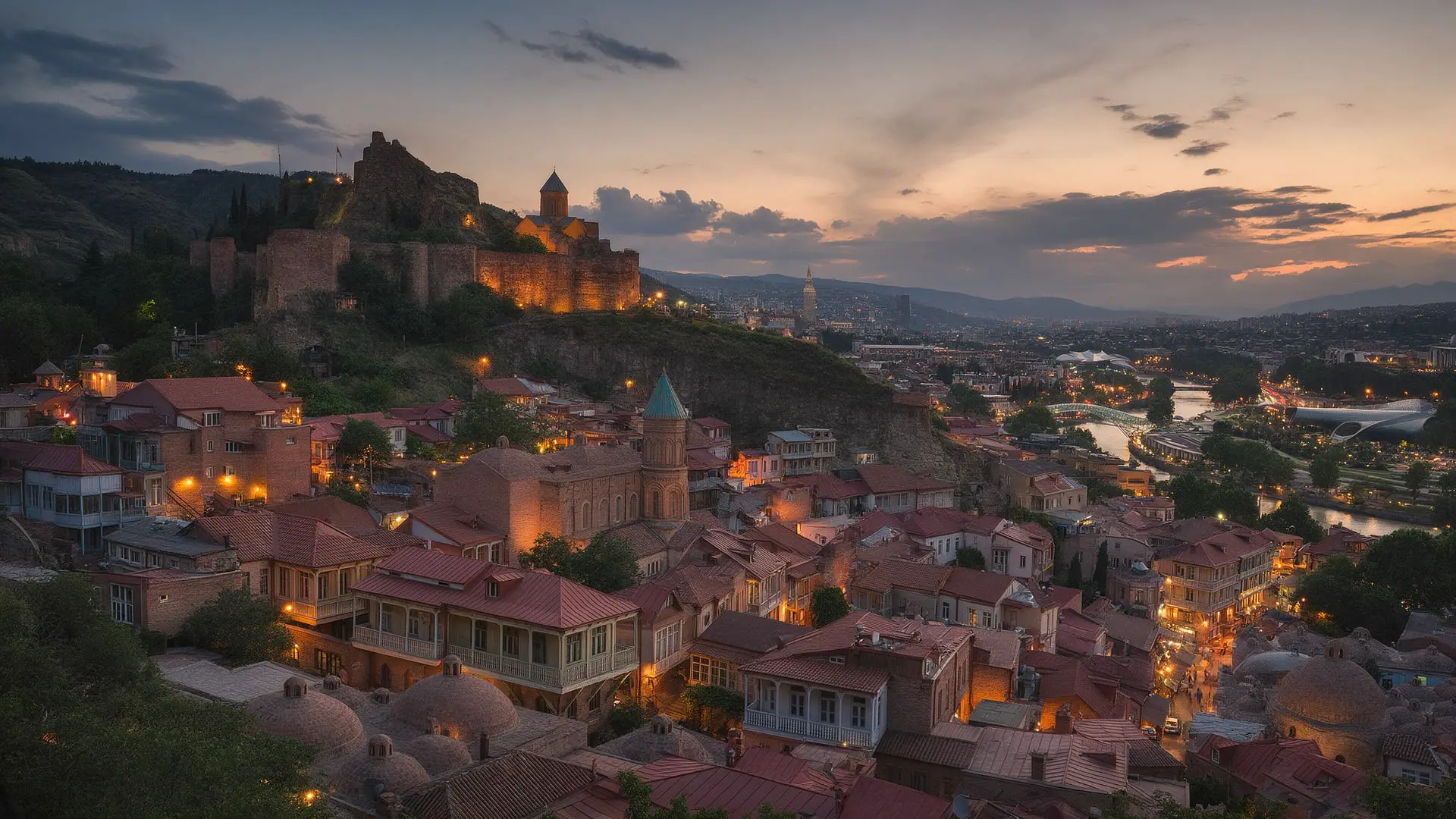
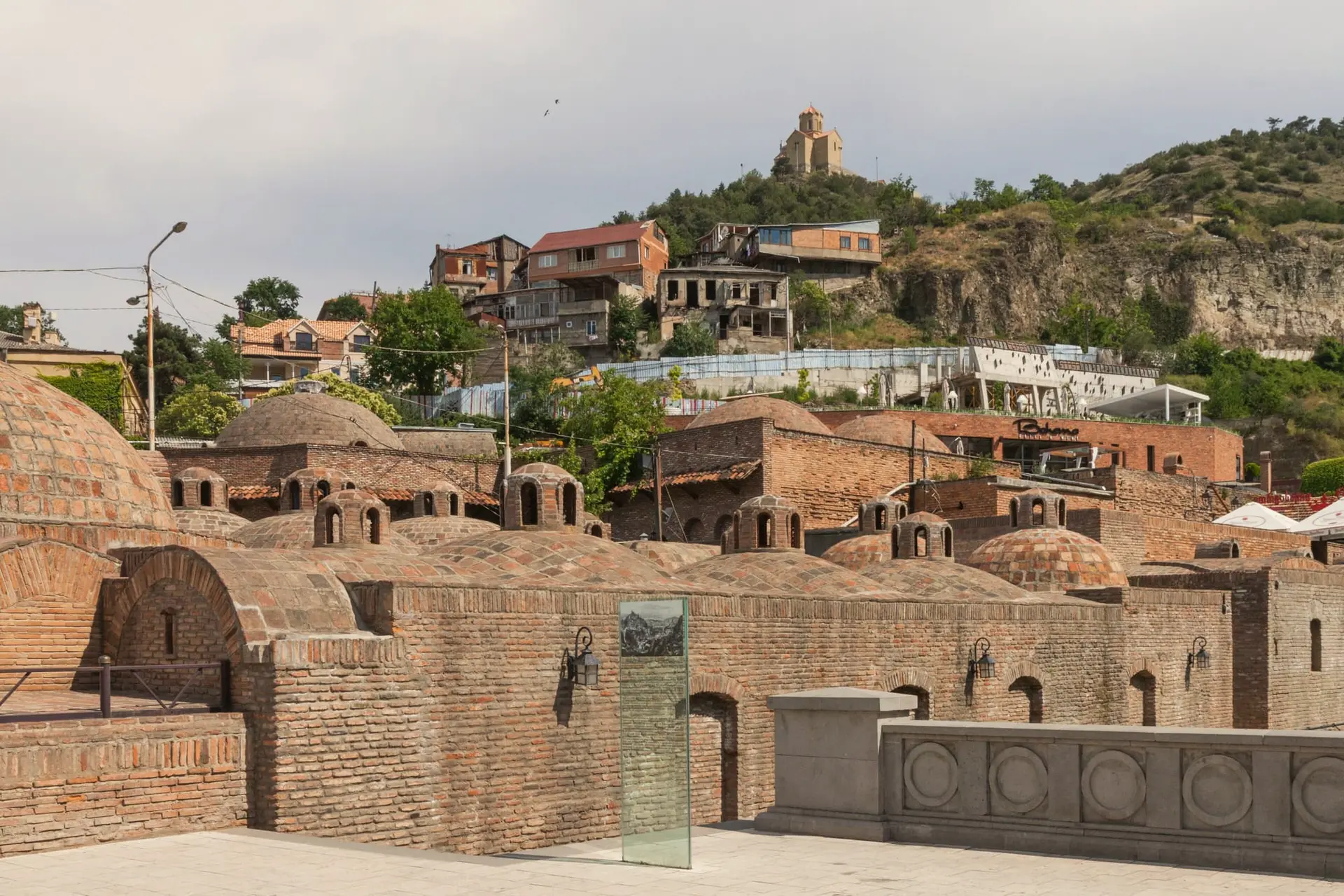
The bathhouses of Abanotubani stand under brick domes below Narikala fortress. Hot springs fill them with natural sulphur water, and the pools are usually about 38 to 40 °C. They are at their best when it is cold outside.
The public halls are separate for men and women. People bathe naked and pay about 5 to 10 GEL each. A private room is rented by the hour for your whole group, for at least an hour. It has a hot pool, often a cold one and sometimes a sauna. Towels, sheets and slippers cost about 2 to 5 GEL each.
The classic extra is the kisa, also spelled kisi. An attendant called a mekise scrubs you with a rough mitt, then washes you in soap foam. It takes 10 to 15 minutes and costs about 10 to 20 GEL, and people usually tip 5 to 10 GEL in cash. Soak a few minutes at a time and drink plenty of water.
Book a private room a day or two ahead for evenings and weekends, and earlier around New Year. The public halls take walk-ins. The hour starts when you get the room, so arrive 15 minutes early. If you are pregnant or have heart problems, ask a doctor first. In winter, rest for 20 minutes before going back out into the cold.
- Chreli Abano, also called the Orbeliani baths, has the blue mosaic front. It is open from 9:00 to 23:00 and takes bookings online. Rooms cost 130 GEL an hour for two, 160 GEL for three and 200 GEL for up to six. A kisa is 20 GEL.
- Royal Bath is open from 8:00 to 23:00. Its five rooms cost from 150 GEL an hour for four people up to 290 GEL for a room with a sauna for eight. A kisa is 15 GEL.
- Gulo's Thermal Spa has private rooms for about 150 to 300 GEL an hour. It stays open until late at night and takes bookings through Facebook or WhatsApp.
- Bathhouse No. 5 has public halls for about 10 GEL for men and 6 GEL for women. The women's hall has showers but no pool.
- Smaller bathhouses on Abano Street rent simple rooms for about 20 to 40 GEL an hour, and some take cash only.
Museums, theatre and wine for cold days
Keep the indoor sights for grey afternoons. Most museums close on Mondays and public holidays.
- Georgian National Museum, Rustaveli Avenue. The basement treasury holds the gold of ancient Colchis. It is open Tuesday to Sunday from 10:00 to 18:00, and foreign adults pay 40 GEL.
- National Gallery, a few minutes up the avenue. Several rooms of Pirosmani, with tickets at about 25 GEL. More of his work, including Fisherman in a Red Shirt, is in the Shalva Amiranashvili Museum of Fine Arts by Freedom Square.
- Opera and Ballet Theatre, Rustaveli Avenue. The season runs through the winter. Dates are on opera.ge, so book before you travel.
- Gabriadze puppet theatre, old town. It has only 80 seats, so book early on gabriadze.com. On its leaning clock tower an angel strikes the bell every hour, and a short free puppet show plays at 12:00 and 19:00.
- Wine bars. Vino Underground, a cellar in Sololaki, was the city's first natural wine bar, and 8000 Vintages has a long Georgian list. Tastings start at about 15 GEL.
- Fabrika, Ninoshvili Street. Cafés and bars in an old Soviet sewing factory.
- Dry Bridge market. Soviet badges, cameras, paintings and, in December, old tree decorations. Go on a dry weekend morning.
Winter food and drink
Cold days are for soup. Kharcho is beef and rice in a sour plum broth, often with walnuts, and chikhirtma is chicken broth thickened with egg. Khinkali, dumplings full of meat and broth, cost about 1 to 1.5 GEL each. Khashi, a garlicky tripe broth, is eaten early in the morning after a long night.
At New Year, tables fill with satsivi, poultry in walnut sauce, and gozinaki, walnuts set in honey. To drink there is Saperavi, amber qvevri wine and chacha, a grape brandy of 40% and stronger.
December, New Year and Christmas
From mid-December, lights go up on Freedom Square and Rustaveli Avenue. In 2025 the main tree was lit on 12 December on First Republic Square, at the far end of the avenue. A New Year village with stalls, concerts and an ice rink ran there, and the rink stayed until 14 January. The 2026 dates have not been announced yet.
There is no big official fireworks show on New Year's Eve, but people set off their own at midnight. Christmas is on 7 January, when the Alilo procession walks through the centre to Sameba Cathedral. Museums close on 1, 2, 7 and 19 January, while most restaurants stay open. More in our guide to New Year in Georgia.
Getting around in winter
Since 1 January 2026, foreign visitors need health and accident insurance for their whole stay, with at least 30,000 GEL of cover. It can be checked at the border.
- Metro. Warm and quick on a wet day. A ride is 1 GEL with a Metromoney card (2 GEL), and changes within 90 minutes are free.
- Taxi. A Bolt ride across the centre is usually under 10 GEL. From mid-December the traffic is heavy and cars are harder to find in the evening.
- Cable car. From Rike Park to Narikala, 2.5 GEL one way with a Metromoney card. In winter it runs from 10:00 to 22:00 and stops in strong wind.
- Funicular. From Chonkadze Street up Mtatsminda, about 10 to 12 GEL one way plus a 2 GEL park card. It runs all year.
- On foot. The old town is steep and cobbled, and the stones get slippery after rain or frost.
Day trips that work in winter
With sunset at about half past five, start early. In winter our cars run on winter tyres and carry snow chains.
- Mtskheta and Jvari, 20 km. The old capital in about 4 hours on our half-day tour. Jvari stands on an open hilltop, so dress warmly.
- Kakheti, 110 km to Sighnaghi. Our wine day takes about 10 hours, with Bodbe, Sighnaghi, lunch at a family winery and Tsinandali. If the Gombori Pass has snow, the driver takes the highway.
- Gudauri, 120 km, 2 hours. A ski day or just a day in the snow. The lifts are due to open on 20 December 2026 (announced 9 October 2026), see Gudauri in winter.
- Kazbegi, 155 km, 3 hours, only when the Jvari Pass is open. When the avalanche risk is high, the road between Gudauri and Kobi closes, sometimes for days. Our Kazbegi tour takes about 11 hours, and Kazbegi in winter has the details.
- Uplistsikhe and Gori, about 90 km, about 7 hours on our tour. Uplistsikhe closes earlier in winter, and the rock is slippery when wet.
A three-day winter weekend
Put the museum day on any day except Monday.
- Day 1, morning. The old town and the Gabriadze tower at 12:00, on the route in what to see in Tbilisi.
- Day 1, afternoon. The cable car to Narikala and the walk down to the baths before dark.
- Day 1, evening. A private room at the baths, booked ahead, and khinkali for dinner.
- Day 2, morning. The National Museum, or the Dry Bridge market first at the weekend.
- Day 2, afternoon. Pirosmani at the National Gallery, then a wine tasting in Sololaki.
- Day 2, evening. The opera, the ballet or a Gabriadze play.
- Day 3. A day trip. Mtskheta leaves time for the funicular at sunset, while Kakheti, Gudauri and Kazbegi take the whole day.
Booking a transfer or a tour
Start with the Tbilisi Airport transfer. The driver meets you in the arrivals hall with a name sign and follows your flight, and 60 minutes of waiting are free.
On a cold day, our Tbilisi city tour by car takes you from Mtatsminda to the baths in about four hours, and the 15:00 start catches the sunset. For a day out, book one of the tours above or the transfer to Gudauri.
In town the Mercedes S-Class suits two people and the V-Class a group of up to seven. For snowy mountain roads we recommend the Toyota Land Cruiser Prado. The price is fixed per car, child seats are free and you pay the driver after the ride. If the authorities close a mountain road on the day, we wait, move the trip to another day or cancel without charge. Book early for New Year week.
Book on the site or in our Telegram bot. It takes about two minutes.
Questions and answers
Is Tbilisi worth visiting in winter?
Yes, if you like quiet cities. It is mild and uncrowded, the sulphur baths are at their best in the cold, and the ski slopes of Gudauri are two hours away. The days are short and often grey.
Does it snow in Tbilisi?
Sometimes, but not much. Snow falls a few times each winter, mostly in January and February, and it rarely stays long in the centre.
How cold is Tbilisi in January?
On average about 7 °C by day and around 0 °C at night. Frosty nights are common, and the wind makes it feel colder.
How much are the sulphur baths in Tbilisi?
Public halls cost about 5 to 10 GEL per person. A private room at the well-known baths is about 130 to 300 GEL an hour for the whole group, and a kisa scrub adds about 10 to 20 GEL.
Do I need to book the sulphur baths in advance?
For a private room, yes. Book a day or two ahead for evenings and weekends, and earlier around New Year. The public halls take walk-ins.
What is there to do in Tbilisi in winter?
The sulphur baths, the museums on Rustaveli Avenue, the opera, the Gabriadze puppet theatre and the wine bars. For snow, Gudauri is two hours away.
Plan the trip
The transfer and the tour from this article, at a fixed price per car. Questions go to WhatsApp or Telegram.

More guides
 Guide
Tbilisi sulphur baths, how they work and which to choose
How the Tbilisi sulphur baths work. Public halls or private rooms, 2026 prices per hour and per kisa scrub, the main bathhouses, etiquette and when to go.14 min read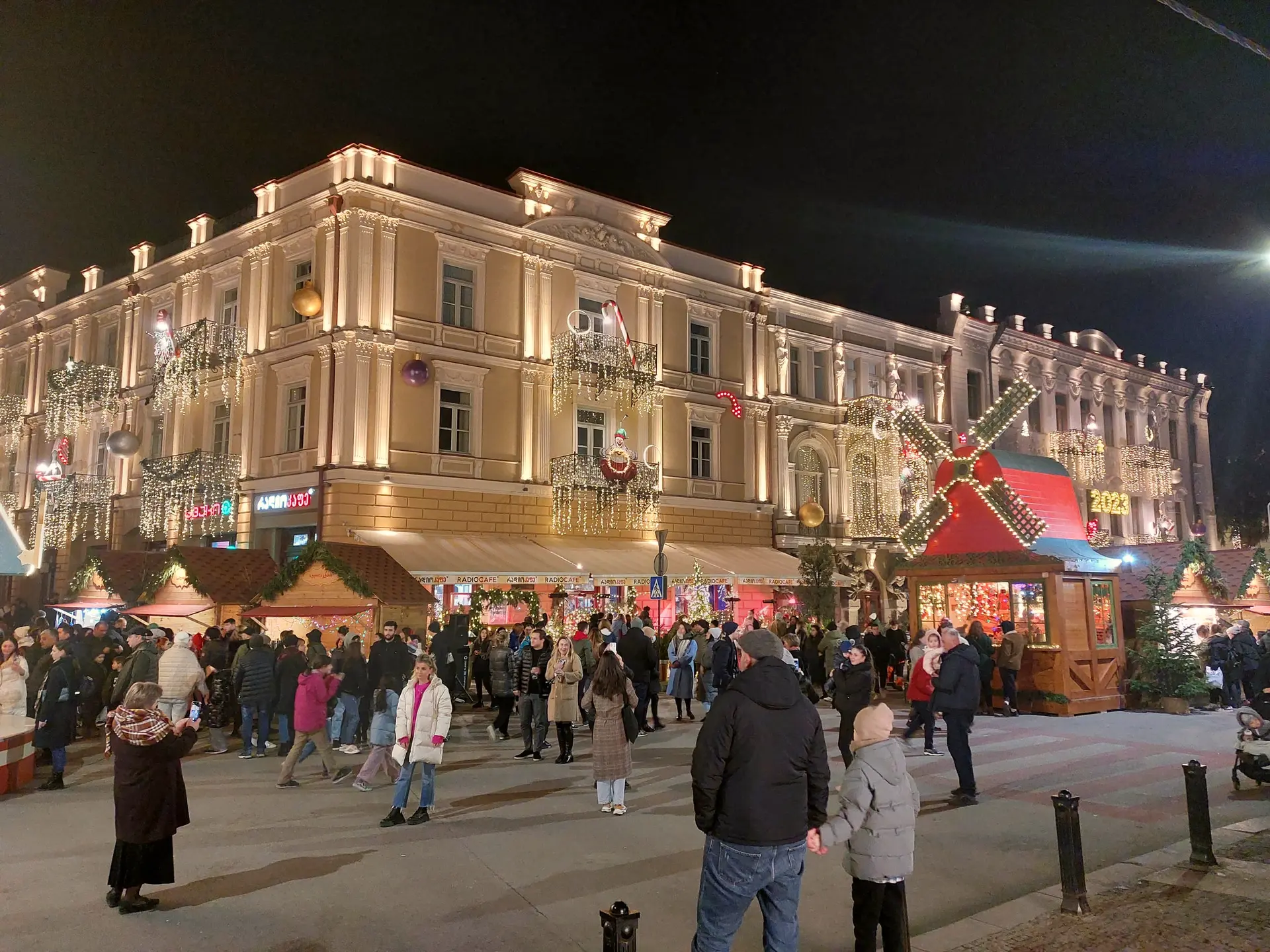 Winter
New Year 2027 in Tbilisi and Georgia
New Year 2027 in Tbilisi, Batumi or a ski resort. The New Year village, fireworks, the free night metro, dinner prices, what is open on 1 and 2 January and Christmas on 7 January.16 min read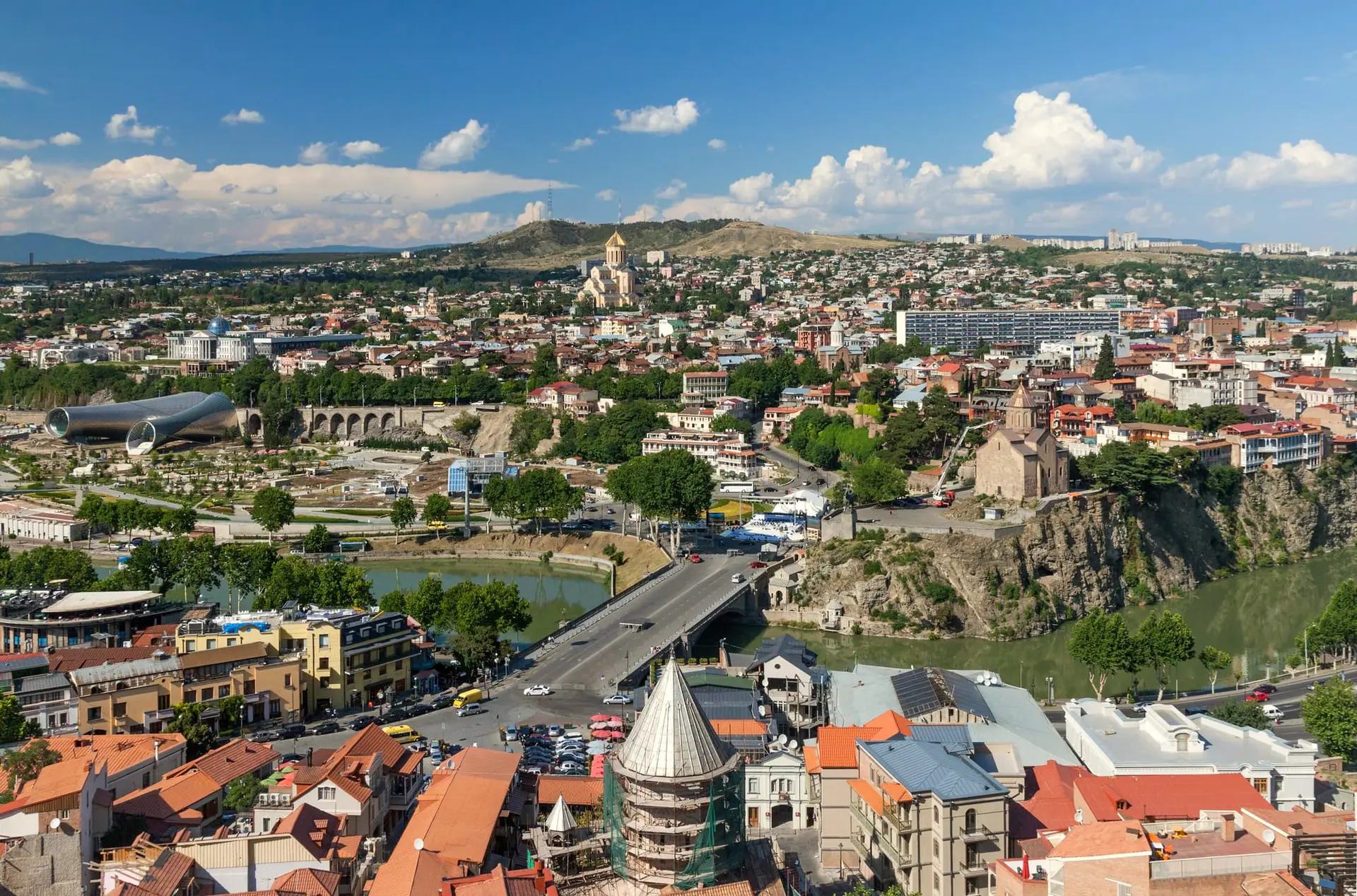 Guide
What to see in Tbilisi in one or two days
Old Tbilisi, Narikala, the sulphur baths, Mtatsminda and Rustaveli Avenue. A plan for one or two days, with cable car, funicular and bath prices.8 min read
Photos: levan simonshvili (Pexels License).