Guides
What to eat in Georgia
Georgian food is built on bread, cheese, grilled meat, walnuts and fresh herbs, and it is made for sharing. This guide covers the dishes worth ordering, how to eat them, what each region cooks and how a Georgian feast works. It also covers wine, vegetarian and halal food, food for children, 2026 prices in Tbilisi and tipping.
Khinkali and how to eat them
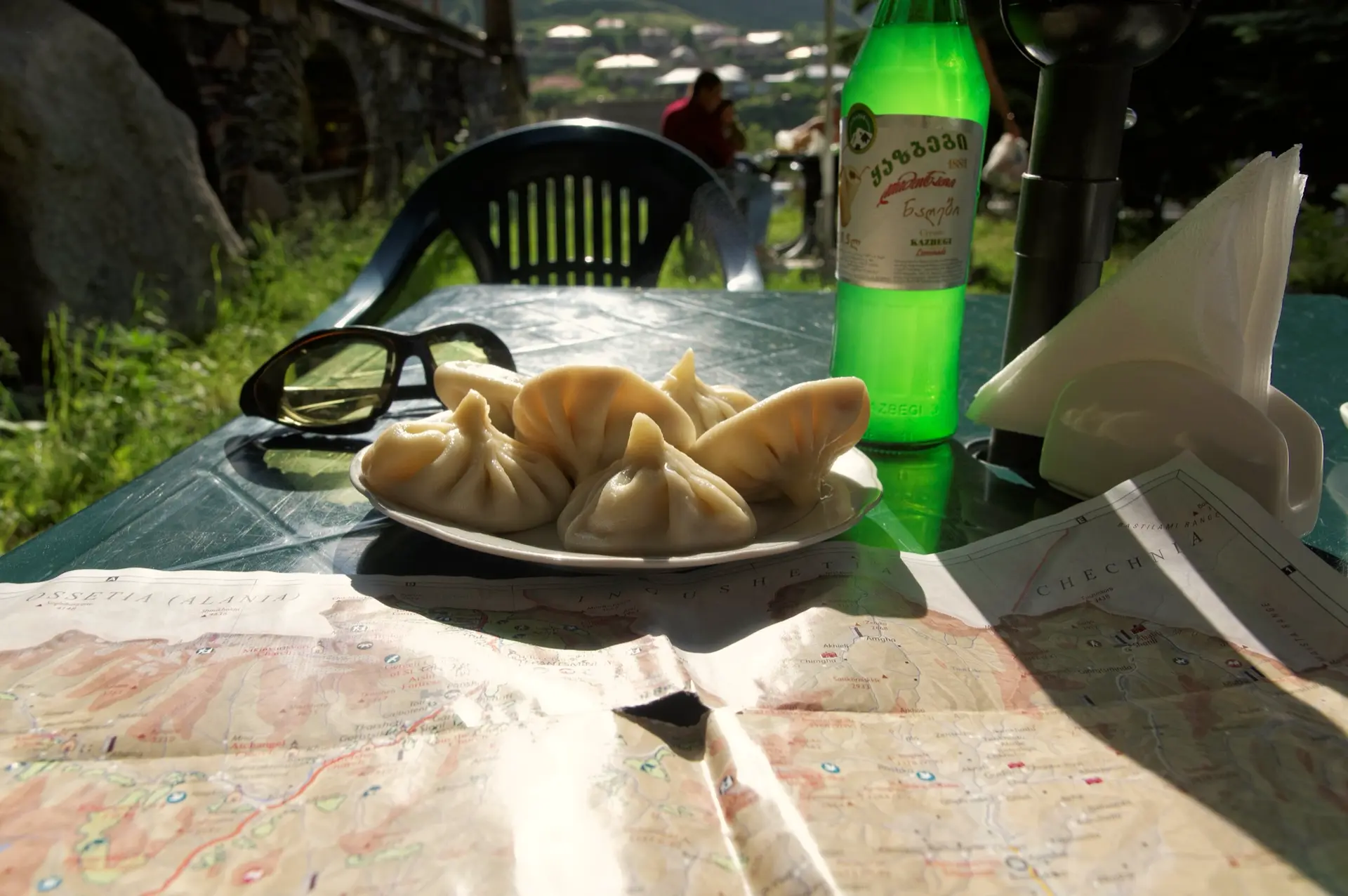
Khinkali are large dumplings filled with meat and broth. They come from the mountains of eastern Georgia. Their invention is credited to the people of Mtiuleti, Pshavi, Khevsureti and Kazbegi. Khinkali from Pasanauri are said to be the best. The village is about 90 km from Tbilisi on the road to Kazbegi, and our Kazbegi day trip drives through it.
In Tbilisi the usual filling is minced beef and pork with herbs. This is kalakuri, or city style. The mountain style, khevsuruli, has only meat, onion, chili and cumin. Lamb is common in the mountains. The meatless versions are filled with mushrooms, potato or cheese.
Eat them with your hands. Hold the khinkali by its doughy top, the kudi. Bite a small hole in the side, sip the broth first, then eat the rest. Leave the top on your plate. The tops show how many each person ate. The usual seasoning is ground black pepper.
Khinkali are sold by the piece, often with a minimum of three to five of one kind. With other dishes on the table, three to six each is plenty. Fresh ones take 20 to 40 minutes, so order them first.
Khachapuri by region
Khachapuri is cheese bread, and every region bakes its own. In 2019 the khachapuri tradition was added to Georgia's national list of intangible heritage. Bakeries sell it from early morning, and restaurants bake it to order.
- Imeruli, from Imereti around Kutaisi. A round, closed pie filled with salty white Imeretian cheese. It is the everyday khachapuri and the safest first order.
- Megruli, from Samegrelo. The same round pie with a second layer of cheese baked on top.
- Adjaruli, from Adjara on the Black Sea. An open boat of dough filled with cheese and finished with butter and a raw egg yolk. Stir the yolk and butter into the hot cheese with a fork. Then tear off pieces of the crust and dip them in. It is rich, so many people share one.
- Penovani, made with flaky puff pastry. Bakeries sell it, and it is easy to eat on the go.
- Lobiani, a cousin filled with spiced beans instead of cheese. The best known comes from Racha and is often made with smoked ham. Ask for plain lobiani if you avoid pork.
- Kubdari, from Svaneti. A round pie filled with chopped beef or pork, onion and Svan spices. Ask which meat is inside.
Grills, stews and cold starters
These are the main dishes on most menus. Georgians order several and share them. Cold dishes reach the table first, and the hot ones can come much later. Many dishes contain walnuts, so tell the waiter about any nut allergy.
- Mtsvadi, Georgian shashlik. Chunks of meat grilled on skewers, in Kakheti over vine cuttings. Pork is the most common, but beef, veal, lamb and chicken are easy to find. It comes with raw onion and often with tkemali, a sour plum sauce.
- Chakapuli. Lamb or veal stewed with tarragon, spring herbs, sour plums and white wine. It is a spring dish, made for Easter.
- Ojakhuri, which means family style. Fried meat with potatoes and onion, served on a clay dish called a ketsi. It is usually made with pork, but some places make it with chicken or beef.
- Chakhokhbili. Chicken stewed with tomatoes, onion and herbs. The name comes from khokhobi, the Georgian word for pheasant, the bird it was first made with.
- Kharcho. A thick beef soup with rice, sour plum and often walnuts. In Samegrelo it is a stew without rice, eaten with ghomi, a cornmeal porridge.
- Satsivi. Chicken or turkey in a cold sauce of walnuts, garlic and spices. Turkey satsivi is the centrepiece of the New Year table.
- Elarji, from Samegrelo. Cornmeal porridge with a lot of sulguni cheese kneaded in, so it stretches.
- Pkhali. Minced spinach, beetroot or beans mixed with ground walnuts, garlic and herbs. Restaurants usually serve three kinds on one plate.
- Badrijani nigvzit. Slices of fried aubergine rolled around a walnut and garlic paste. It is served cold.
- Lobio in a clay pot. Red beans stewed with coriander, garlic and spices. Eat it with mchadi, a flat cornbread, and pickles. Some versions contain meat or ham, so ask if you avoid them.
A first dinner for two
On your first night in Georgia, two people can order the list below. It is a lot of food, which is the Georgian way.
In an ordinary Tbilisi restaurant it comes to about 80 to 120 GEL with wine. A service charge, if there is one, comes on top.
- One Imeruli or Megruli khachapuri to share.
- One cold starter, pkhali or badrijani nigvzit.
- Ten khinkali, five each. Order them first, as they take longest.
- One hot dish. Mtsvadi, chakapuli in spring, or lobio in a clay pot with mchadi.
- Half a litre of house wine, or Georgian lemonade.
- Churchkhela from a market stall for later.
What each region cooks
Every region has dishes you rarely see elsewhere. When you travel, order the local ones.
- Svaneti. Kubdari, tashmijabi (mashed potato beaten with cheese) and Svan salt, ground with garlic, coriander, blue fenugreek and chili. All three have been on Georgia's heritage list since 2015. See our Svaneti guide.
- Samegrelo, also called Megrelia. The spiciest food in Georgia, with plenty of ajika, a hot paste of peppers, garlic and herbs. Try elarji, Megruli khachapuri, kharcho with ghomi and gebzhalia, rolls of soft cheese with mint in matsoni, a Georgian yogurt. The Martvili and Okatse canyons are in this region.
- Adjara. Adjaruli khachapuri, borano (cheese melted in browned butter, eaten with mchadi) and sinori (thin sheets of dough with butter, sour cream and garlic). Batumi adds Black Sea fish. See Batumi sights and the Adjara tour.
- Imereti. Imeretian cheese and Imeruli khachapuri. The Green Bazaar in Kutaisi is the place to buy the cheese, see our Kutaisi guide.
- Kakheti. Mtsvadi over vine cuttings, dedas puri bread from the tone oven, churchkhela and, above all, wine. See our Kakheti wine guide.
- Racha. Lori, a smoked ham, lobiani made with ham and Khvanchkara, a semi-sweet red wine.
- Mtiuleti and Kazbegi. Khinkali and river trout on the road to Mount Kazbek.
The supra, toasts and table manners
A supra is a Georgian feast. In 2017 it was added to the national list of intangible heritage. A tamada, the toastmaster, leads it. The host or the guests choose him. A good tamada speaks well and can drink a lot without getting drunk.
The tamada proposes each toast and speaks about its theme at length. The first toasts are usually to God and to peace. Later come toasts to those who have died, to the children and to Georgia. Near the end come a toast to all the saints and a toast to the tamada.
Listen to the toast, then drink. You may eat during the toasts, but do not talk over them. The tamada may pass a toast to another guest to continue it. This is called alaverdi. The Georgian word for cheers is gaumarjos, which means victory.
Do not drink between toasts. Do not raise a toast with beer. By an old Tbilisi custom, beer toasts are for people with a bad name. Drink slowly and always with food, as getting drunk at the table is shameful. If you do not drink, say so at the start and nobody will mind.
- Dishes are shared. Order for the whole table and help yourself.
- In a restaurant it is fine to leave food. In a home, try a little of everything and praise the cook.
- If you are invited home, bring a small gift such as sweets, wine or flowers.
- Bread comes with most meals even if you do not ask for it. Some places charge a little for it.
Wine, qvevri and chacha
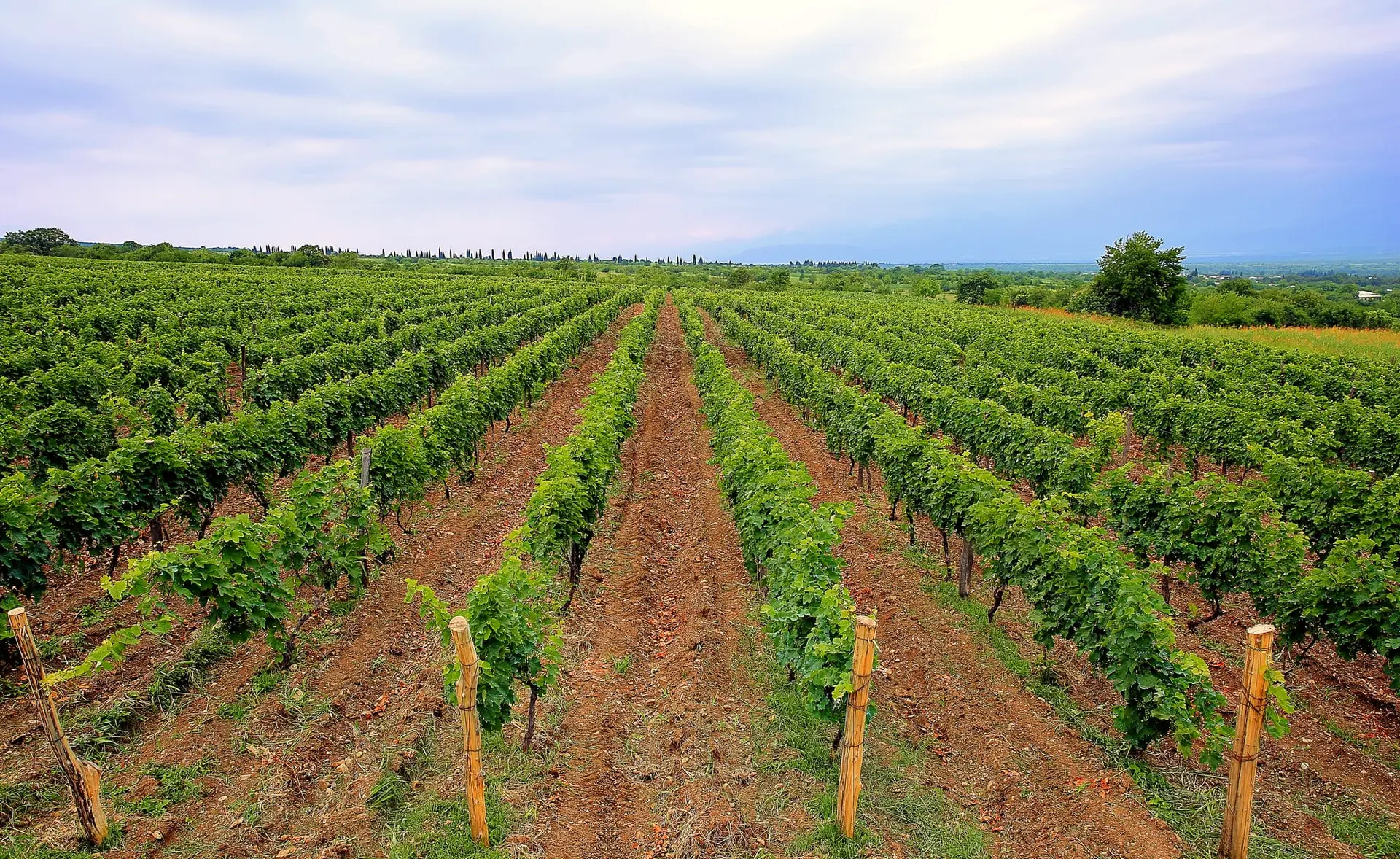
Georgia has made wine for about 8,000 years. In 2017 scientists found traces of grape wine in clay jars from about 6000 BC. The jars came from two Neolithic sites about 50 km south of Tbilisi.
The traditional way is to ferment and age wine in a qvevri, a large clay jar buried in the ground. UNESCO added the method to its intangible heritage list in 2013. White grapes fermented on their skins in a qvevri give amber wine, deep gold and slightly tannic.
Restaurants sell house wine by the glass or the jug, and it costs much less than bottled wine. Kakheti grows about 70 per cent of Georgia's grapes, see our Kakheti wine guide. The drink-drive limit is only 0.3 per mille, so on a tasting day someone else should drive. That is what our Kakheti wine day and the Tbilisi to Kakheti transfer are for.
- Saperavi, the main red grape. Its wine is dark and full. Kindzmarauli is a semi-sweet Saperavi from Kvareli.
- Rkatsiteli, the main white grape. It is made both European style and as amber wine.
- Mtsvane, Kisi and Khikhvi, other white grapes worth trying. Tsinandali is a dry white blend of Rkatsiteli and Mtsvane.
- Khvanchkara, a semi-sweet red from Racha, made from Aleksandrouli and Mujuretuli grapes.
- Chacha, a brandy distilled from what is left after the grapes are pressed. Shop chacha is about 40 per cent, and home-made is often much stronger. Sip it.
Vegetarian, vegan and halal food
Georgia is easy for vegetarians. Khachapuri, pkhali, badrijani, lobio, elarji and mushroom khinkali are all made without meat.
Vegans can make use of the Orthodox fasts. On fast days believers give up meat, dairy and eggs. They fast on most Wednesdays and Fridays, for seven weeks before Easter and from 28 November to 6 January before Christmas. In 2027 Great Lent starts on 15 March, and Easter is on 2 May. Many restaurants have a fasting menu, samarkhvo in Georgian, with no animal products. Fish is allowed on some fast days, so check.
Good vegan choices are pkhali, badrijani nigvzit, lobio without meat, ajapsandali (a vegetable stew), mushrooms baked on a ketsi, mchadi and mushroom or potato khinkali. Georgian cheese has no vegan version, and every khachapuri contains cheese.
Muslim visitors should know that pork is common. Mtsvadi is often pork. Tbilisi khinkali are usually beef and pork. Ojakhuri, kupati sausages and kubdari often contain pork, and some lobio is cooked with ham. Chakapuli is cooked in white wine.
Lamb, beef and chicken dishes are safer. Ask for lamb mtsvadi or beef khinkali, and order chakhokhbili, satsivi and the vegetable dishes. The phrase ghoris khortsi ar minda means I do not want pork. Pork-free is not the same as halal, though.
About one Georgian in ten is Muslim, mostly in Adjara and Kvemo Kartli. Two 2026 halal guides point to the Old Town streets near the Jumah Mosque and Aghmashenebeli Avenue in Tbilisi, and to central Batumi around the Orta Jame mosque. Turkish and Arab restaurants there serve halal meat. There is no single halal sign, so ask the staff.
If you book our Kakheti wine day, tell us about vegetarian or other food needs in advance. We choose the winemaking family to match.
Sweets and food for children
Georgian food is full of herbs but rarely hot. The exception is Samegrelo, where ajika goes into many dishes. If in doubt, ask whether a dish is tskhare, which means spicy.
Most children love khachapuri, and Imeruli and penovani are the simplest. Mchadi, sulguni cheese, chicken mtsvadi, potatoes and plain khinkali also work. Children enjoy eating khinkali by hand, but the broth inside is hot.
Walnuts are in many dishes and sweets, including pkhali, badrijani, satsivi, churchkhela and gozinaki. Tell the waiter about any nut allergy.
Most Tbilisi restaurants have high chairs. Food can take a while, so order bread or khachapuri first. To drink, children like Georgian lemonade made with syrups, such as tarragon or pear. Lagidze lemonades have been on the national heritage list since 2014.
Buy sweets at a market. In Tbilisi the Dezerter Bazaar near the central railway station sells churchkhela, tklapi, cheese and spices.
- Churchkhela. Walnuts or hazelnuts on a string, dipped in thickened grape juice and dried. The Kakhetian way of making it has been on the national heritage list since 2015.
- Tklapi. Sun-dried fruit leather. Sweet tklapi is made from apricots or peaches, and sour tklapi from cherry plums goes into kharcho.
- Gozinaki. Walnuts set in honey and cut into diamonds. It is made for New Year and Christmas.
Prices and tipping in 2026
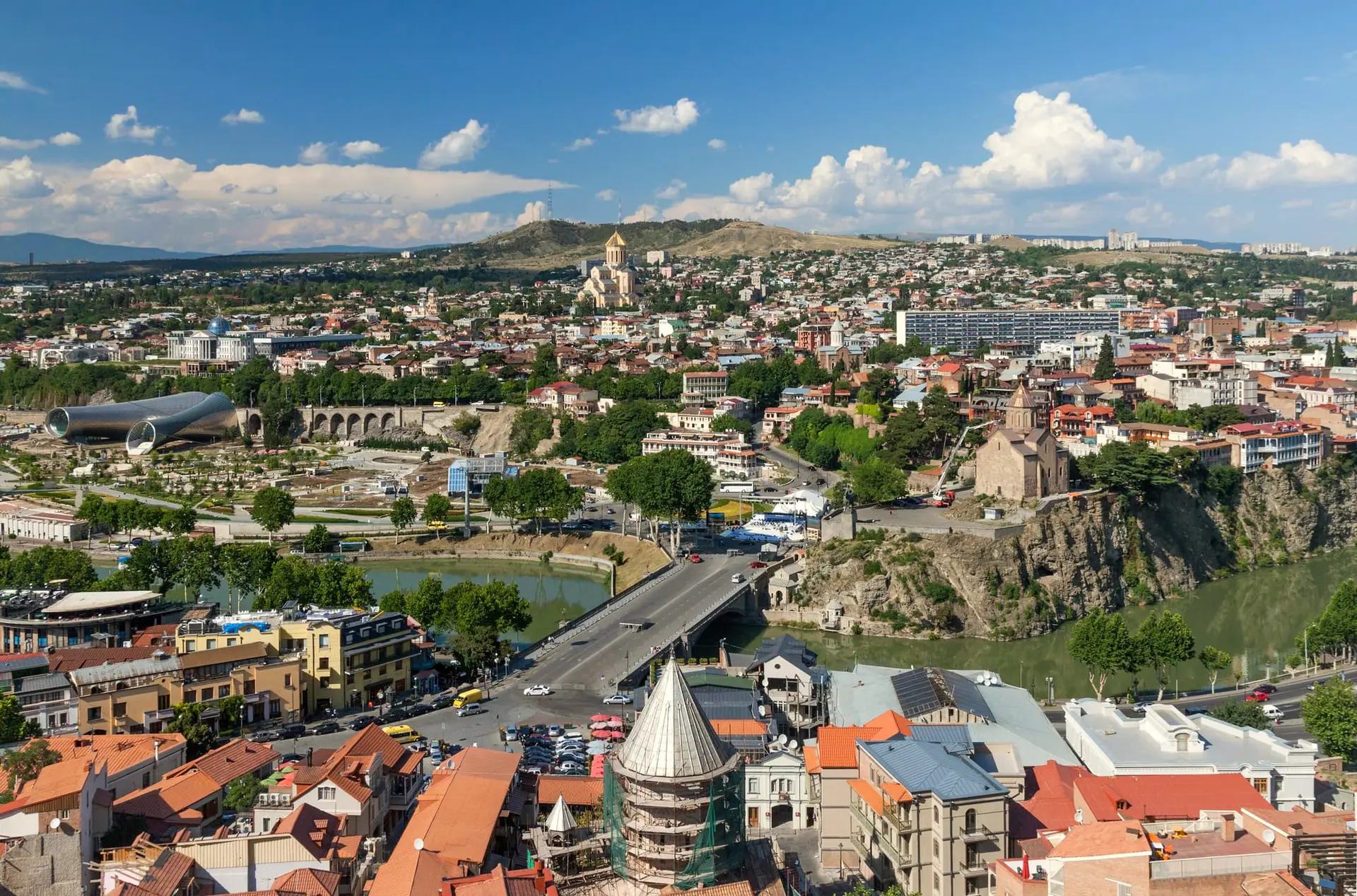
The prices below are for Tbilisi in 2026. The Old Town, Batumi's seafront and places with a view charge more. In August 2026 one US dollar was about 2.6 GEL.
A khinkali costs about 1 to 2 GEL. An Imeruli khachapuri is 5 to 8 GEL and an Adjaruli 10 to 25 GEL. Pkhali, badrijani or lobio cost 5 to 8 GEL, mtsvadi 10 to 18 GEL and a glass of wine 6 to 12 GEL. These figures are from Sakhva Travel in May 2026 and madloba.info in October 2026.
A meal at an inexpensive restaurant is about 29 GEL, usually 20 to 50 GEL. A three-course dinner for two at a mid-range restaurant is about 100 GEL without drinks. These figures are from Numbeo on 15 October 2026.
Many restaurants add a service charge of 10 to 18 per cent. It shows on the bill as service or მომსახურება. If it is there, you do not need to tip more. If not, leave about 10 per cent for good service. Cash goes straight to the waiter. In cafés and bakeries, round up the bill.
To see a real Georgian table, join our Kakheti wine day, with lunch at a family winery.
Questions and answers
What is the national dish of Georgia?
Khachapuri, the cheese bread, is the usual answer. In 2019 the khachapuri tradition was added to Georgia's national list of intangible heritage. Khinkali, the meat dumplings, are just as loved.
How do you eat khinkali?
With your hands. Hold the top, bite a small hole in the side, sip the broth, then eat the rest. Leave the doughy top on your plate.
Is Georgian food spicy?
Mostly not. It uses a lot of herbs, garlic and walnuts but little chili. Food from Samegrelo is the exception, as it is seasoned with hot ajika.
Is there halal food in Georgia?
Yes, in Tbilisi and Batumi, mainly in Turkish and Arab restaurants. Georgian restaurants use a lot of pork, so ask. Lamb, beef and chicken dishes and the vegetable dishes are the safest choices.
Is Georgia good for vegetarians and vegans?
Yes. Khachapuri, pkhali, badrijani, lobio and elarji have no meat. Many restaurants also have a fasting menu with no animal products, because Orthodox Georgians fast on many days of the year.
How much does a meal cost in Tbilisi in 2026?
A meal at an inexpensive restaurant is about 20 to 50 GEL, and a khinkali about 1 to 2 GEL. Dinner for two with wine at an ordinary restaurant is about 80 to 120 GEL.
Do you tip in Georgian restaurants?
Check the bill first. Many restaurants add a service charge of 10 to 18 per cent. If there is none, leave about 10 per cent for good service.
Plan the trip
The transfer and the tour from this article, at a fixed price per car. Questions go to WhatsApp or Telegram.
More guides
 History
Sighnaghi and Bodbe from Tbilisi
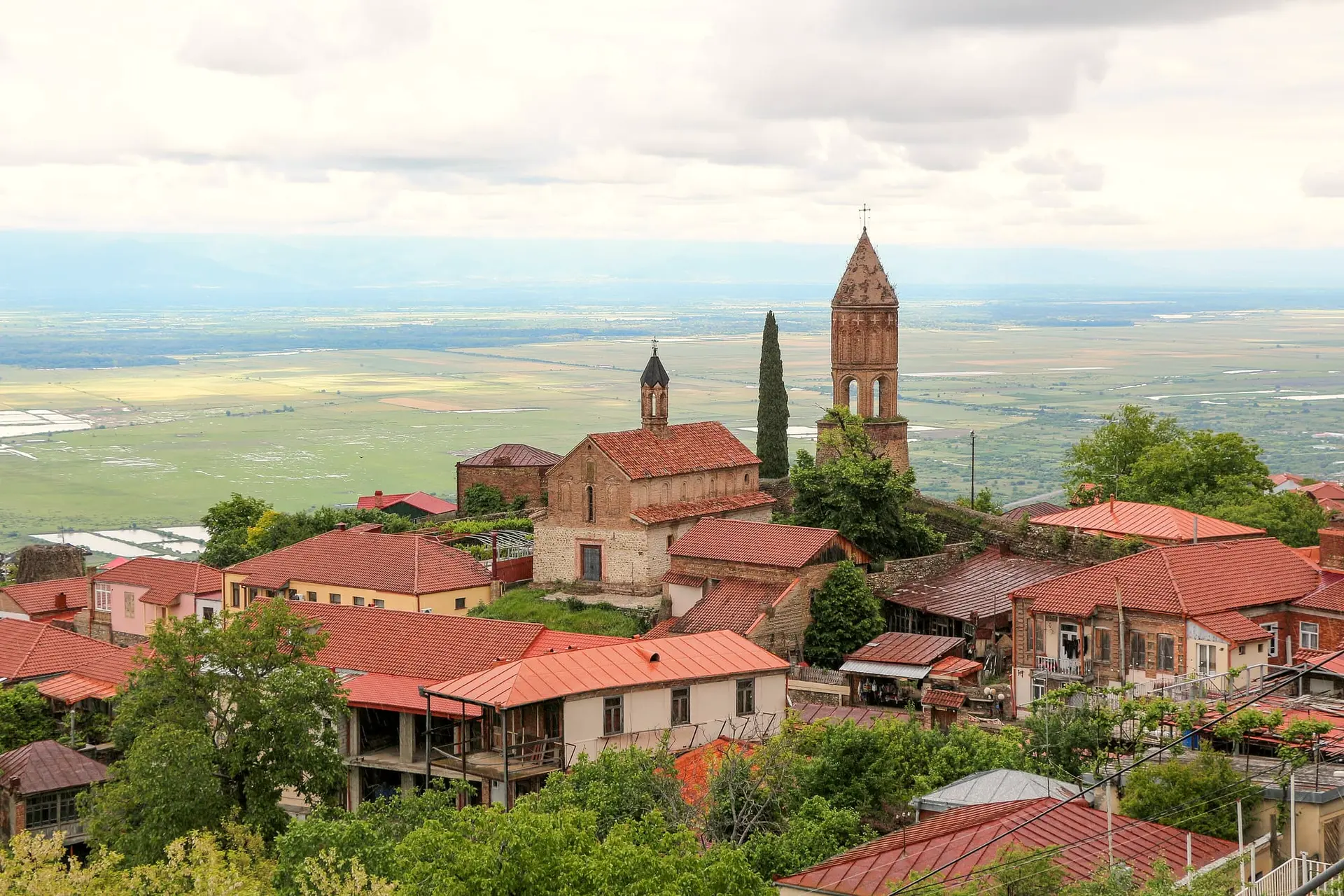
How far Sighnaghi is from Tbilisi, where the minibus leaves and when a car with a driver makes sense. The town walls, Bodbe Monastery, wine and a one-day plan.6 min read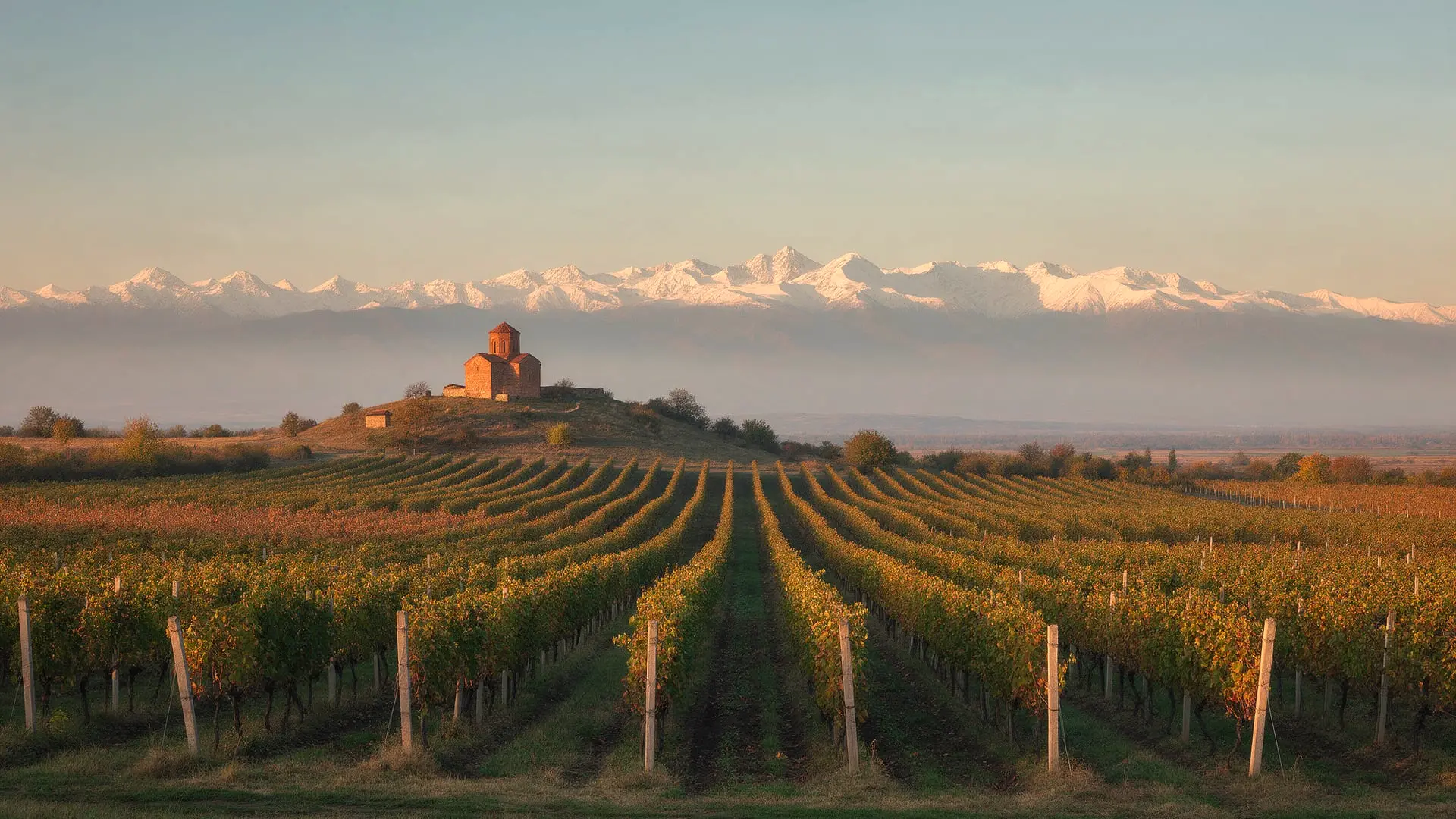 Wine
A one-day wine trip to Kakheti from Tbilisi
How to see Sighnaghi, Bodbe, Alaverdi, Tsinandali and qvevri wineries in one day from Tbilisi. Two routes, distances, the harvest season and getting there.4 min read Route
The best day trips from Tbilisi
Mtskheta, Kazbegi, Kakheti, Uplistsikhe, Borjomi, David Gareja, Dashbashi and Vardzia from Tbilisi. Drive times, marshrutkas, 2026 tickets and combos.17 min read
Photos: Vyacheslav Argenberg (CC BY 4.0).