Guides
What to see in Tbilisi in one or two days
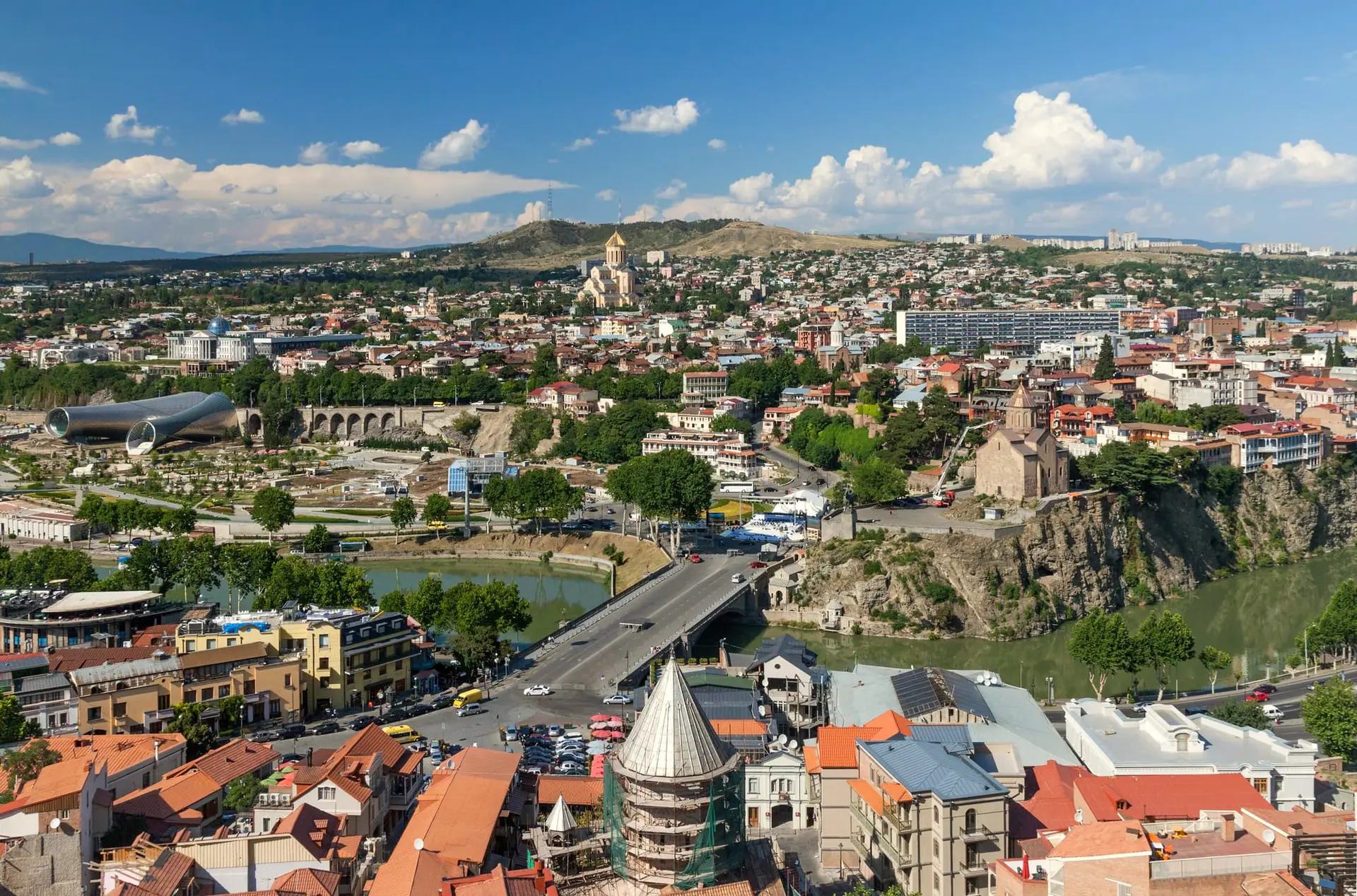
Most of what you want to see in Tbilisi is in or near the old town, so the centre is easy to walk. One day is enough for the old town, Narikala fortress and the sulphur baths. A second day leaves time for Rustaveli Avenue, Mount Mtatsminda and the Marjanishvili area across the river.
The old town and the Bridge of Peace
Start at Freedom Square, which has a metro station of the same name. From here Kote Afkhazi Street, the old Leselidze Street, runs down into the old town. Step into Sioni Cathedral on the way, where the grapevine cross of St Nino is kept. Close by is the 6th-century Anchiskhati Basilica, the oldest surviving church in Tbilisi.
Behind Anchiskhati, on Shavteli Street, stands the crooked clock tower of Rezo Gabriadze's puppet theatre. Every hour a small door opens at the top and an angel strikes the bell. At 12:00 and 19:00 there is a short puppet show, and it is free to watch.
The Bridge of Peace is two minutes away. It is a 150 m footbridge of glass and steel that opened in 2010, and at night more than a thousand LEDs light it up. On the other bank is Rike Park, where the cable car to Narikala starts.
Metekhi church stands on a cliff above the river. It was built in 1278-1289, and next to it is a statue of King Vakhtang Gorgasali on horseback, the king said to have founded Tbilisi. From here you look straight across at the baths and the fortress. Further up, on Elia Hill, is Sameba, the Holy Trinity Cathedral. It was consecrated in 2004 and is the largest church in Georgia. Women should cover their hair in churches, and scarves are usually left by the door.
Narikala and the cable car
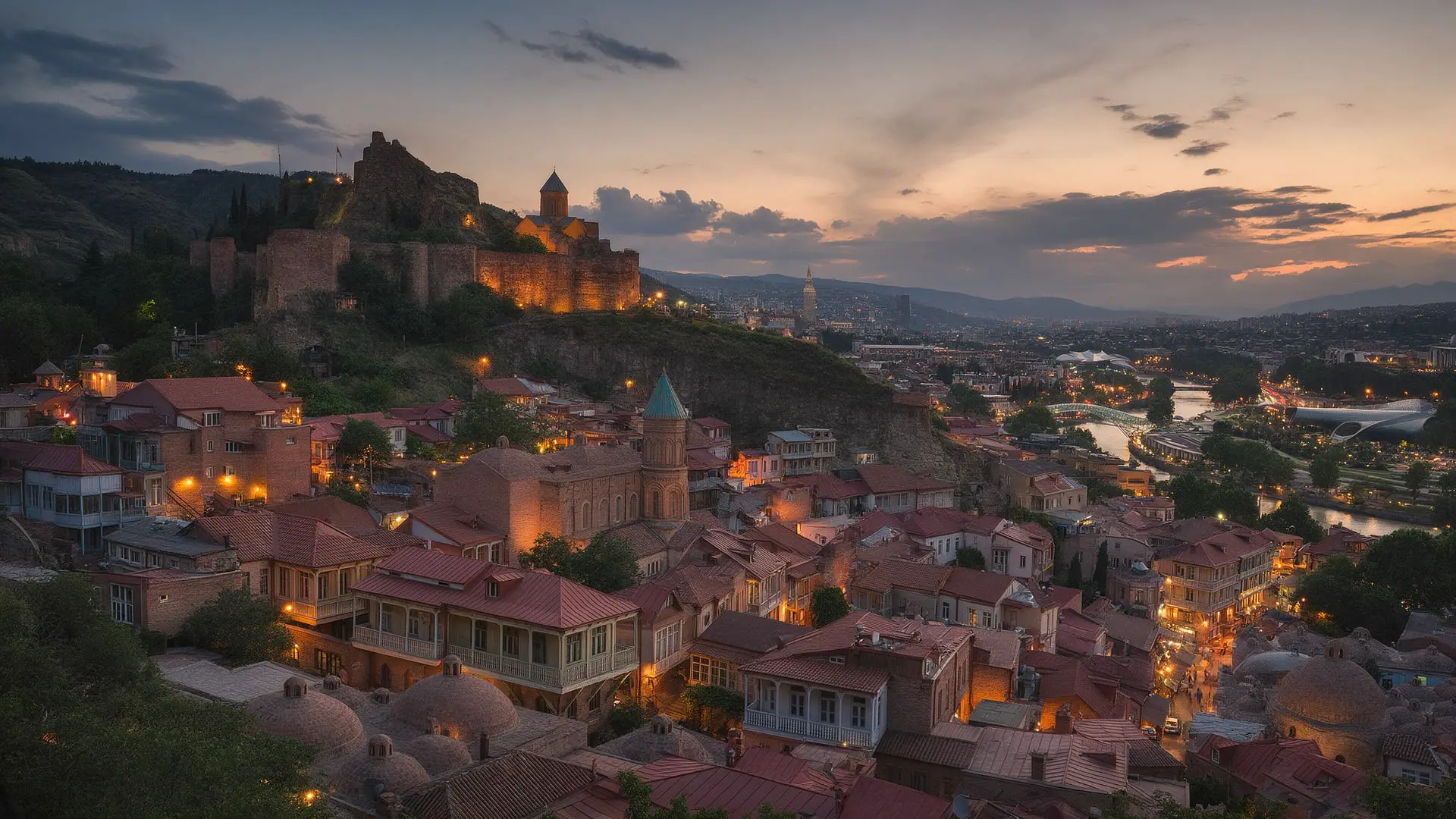
Narikala fortress has stood on the hill above the old town since the 4th century. The Mongols gave it its name, which means “little fortress”. Part of it was damaged by an earthquake in 1827 and pulled down, but the remaining walls and towers can be seen from almost anywhere in the old town. The Church of St Nicholas inside was rebuilt in the 1990s. Entry is free.
A 10-minute walk along the ridge brings you to the Mother of Georgia (Kartlis Deda). The 20 m statue went up in 1958 for the city's 1,500th anniversary. She holds a bowl of wine for friends in one hand and a sword for enemies in the other.
- The cable car runs from Rike Park up to Narikala. The ride takes about two minutes.
- A one-way ticket is 2.5 GEL. You pay with a Metromoney transport card, and cash is not accepted. You can buy and top up the card at the station.
- It runs from 10:00 until late evening, longer in summer than in winter. It closes in strong wind.
- Walk down rather than ride. The stairs lead straight to the sulphur baths in about 15 minutes.
The sulphur baths of Abanotubani
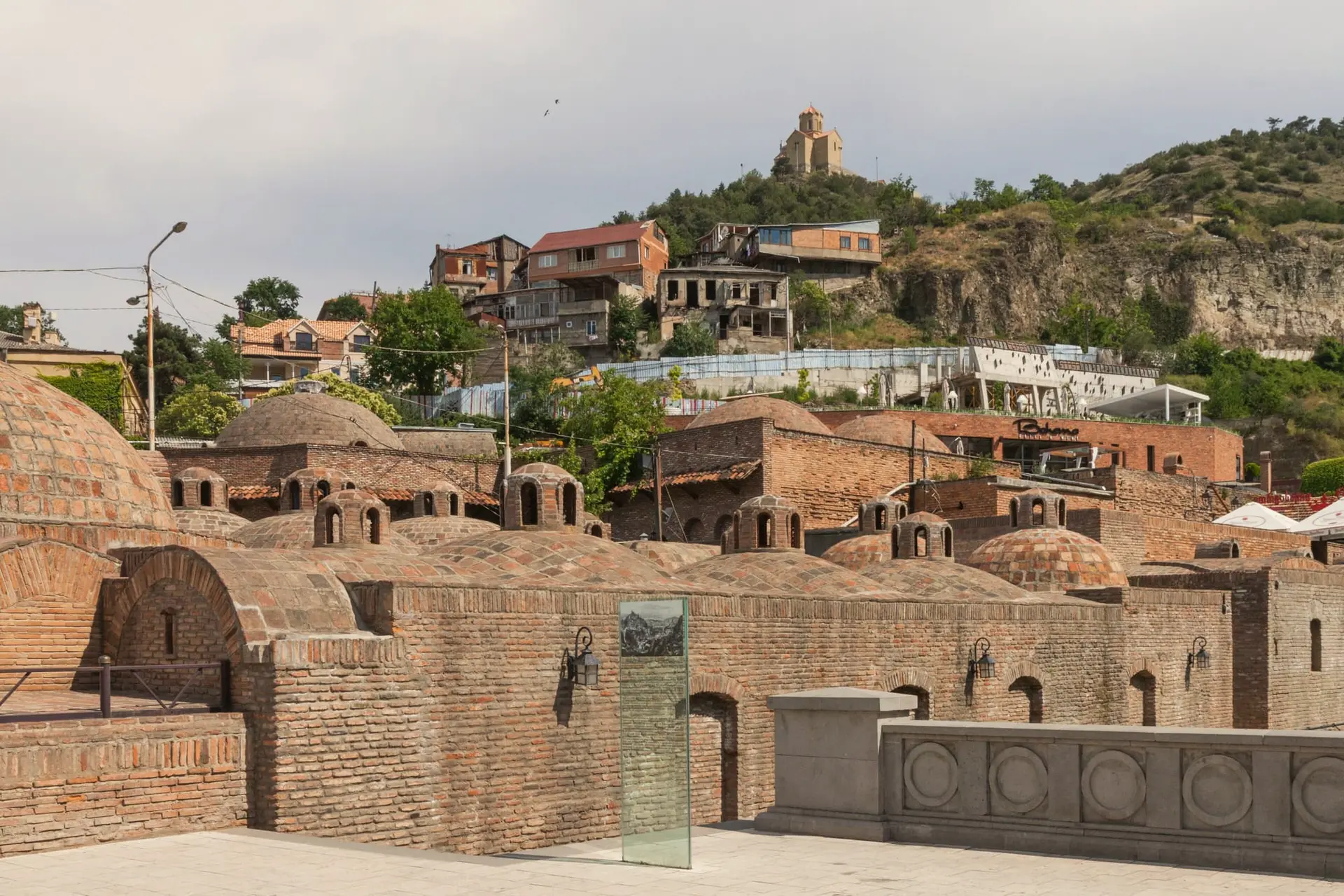
Tbilisi grew up around its hot springs. Legend says King Vakhtang Gorgasali was hunting here when his falcon and a pheasant fell into a hot spring, and he decided to build a city on the spot. The name comes from the Georgian word tbili, which means warm. The sulphur water comes out of the ground at about 38-40 °C, and the brick domes of the bathhouses rise straight out of the pavement below Narikala.
- The public hall, with separate sections for men and women, is the cheapest option. It usually costs up to 10 GEL.
- A private room with its own pool is rented by the hour for your whole group. Prices start at about 50 GEL an hour and are much higher at the well-known baths.
- The one you will notice first is Chreli Abano, the “colourful bath”, with a facade of blue mosaic.
- A scrub with a rough mitt (a kisa) and a massage cost extra.
- For evenings and weekends, book a private room a day or two ahead.
- Behind the baths begins the Leghvtakhevi gorge. A path along the stream leads to a small waterfall, five minutes on foot. Nearby is the Jumah Mosque, where Sunni and Shia Muslims pray together.
Rustaveli Avenue, the Dry Bridge and Mtatsminda
Rustaveli Avenue runs for 1.5 km from Freedom Square to Rustaveli metro station. Along it stand the Parliament, the Opera House, the Rustaveli Theatre, Kashveti church and the Georgian National Museum. In the museum, see the treasury with the gold of ancient Colchis. The museum is open Tuesday to Sunday from 10:00 to 18:00 and closed on Mondays.
The flea market at the Dry Bridge is a 10-15 minute walk from Freedom Square. People sell Soviet badges, china, old cameras, paintings and drinking horns. It is open every day from about 10:00 to 17:00. Weekends bring the most sellers, and on rainy days many stay at home.
Mount Mtatsminda with its TV tower can be seen from anywhere in the centre. The funicular, first opened in 1905, goes up from Chonkadze Street. At the ticket office you first buy a park card for 2 GEL, and the ride is then 10 GEL one way. At the middle station you can get off for Mama Daviti church and the Pantheon, where Ilia Chavchavadze, Alexander Griboyedov and many other well-known people are buried. After 19:00 the funicular does not stop at the middle station.
At the top there is an amusement park and a 65 m Ferris wheel. The park sits at 770 m, the highest point of the city, and you see the whole of Tbilisi from it. Sunset is the best time to come up.
A plan for one or two days
The plan assumes an easy pace, and almost all of it is on foot.
If you would rather leave the city on day two, go to Mtskheta. The old capital of Georgia is 20 km from Tbilisi, and its main churches take half a day.
- Day 1, morning. Freedom Square, Kote Afkhazi Street, Sioni and Anchiskhati. Be at the Gabriadze tower by 12:00.
- Day 1, afternoon. The Bridge of Peace, Rike Park and the cable car to Narikala. Walk on to the Mother of Georgia, then down on foot to the baths and the waterfall.
- Day 1, evening. Sunset at Metekhi, then a sulphur bath and dinner in the old town.
- Day 2, morning. The Dry Bridge market and a walk along Rustaveli Avenue.
- Day 2, afternoon. The National Museum (closed on Mondays) and lunch. Towards sunset, the funicular up Mtatsminda.
- Day 2, evening. Fabrika on Ninoshvili Street. In 2016 this Soviet sewing factory became a hostel with bars and cafés around a courtyard full of graffiti. Aghmashenebeli Avenue with its restored 19th-century houses is close by.
Getting around
The old town, Narikala and the baths are best seen on foot. The streets are steep and cobbled, so wear comfortable shoes. The metro has two lines. A ride costs 1 GEL with a Metromoney card, and the card itself is 2 GEL. The same card works on the cable car. A Bolt taxi within the centre usually costs under 10 GEL.
A car makes sense for places that are too far to walk, such as Mtatsminda or the Chronicle of Georgia above the Tbilisi Sea. On our private Tbilisi city tour a driver takes you to the main sights in about four hours, at a fixed price. If you are flying in, book a transfer from the airport. The airport is 17 km from the centre. You pay the driver at the end of the ride.
Questions and answers
How many days do you need in Tbilisi?
One full day covers the old town, Narikala and the sulphur baths. With two days you can add Rustaveli Avenue, the museum, Mtatsminda and Fabrika, or take a half-day trip to Mtskheta.
How much is the cable car to Narikala?
2.5 GEL one way. You pay with a Metromoney card, and cash is not accepted. The ride up from Rike Park takes about two minutes.
How much do the sulphur baths cost?
The public hall usually costs up to 10 GEL. A private room for your group starts at about 50 GEL an hour and costs more at the well-known baths. A scrub and a massage are extra.
How do you get up Mtatsminda?
The easiest way is the funicular from Chonkadze Street. The park card is 2 GEL and the ride is 10 GEL one way. You can also go up by taxi.
Plan the trip
The transfer and the tour from this article, at a fixed price per car. Questions go to WhatsApp or Telegram.

More guides
 Guide
Tbilisi sulphur baths, how they work and which to choose
How the Tbilisi sulphur baths work. Public halls or private rooms, 2026 prices per hour and per kisa scrub, the main bathhouses, etiquette and when to go.14 min read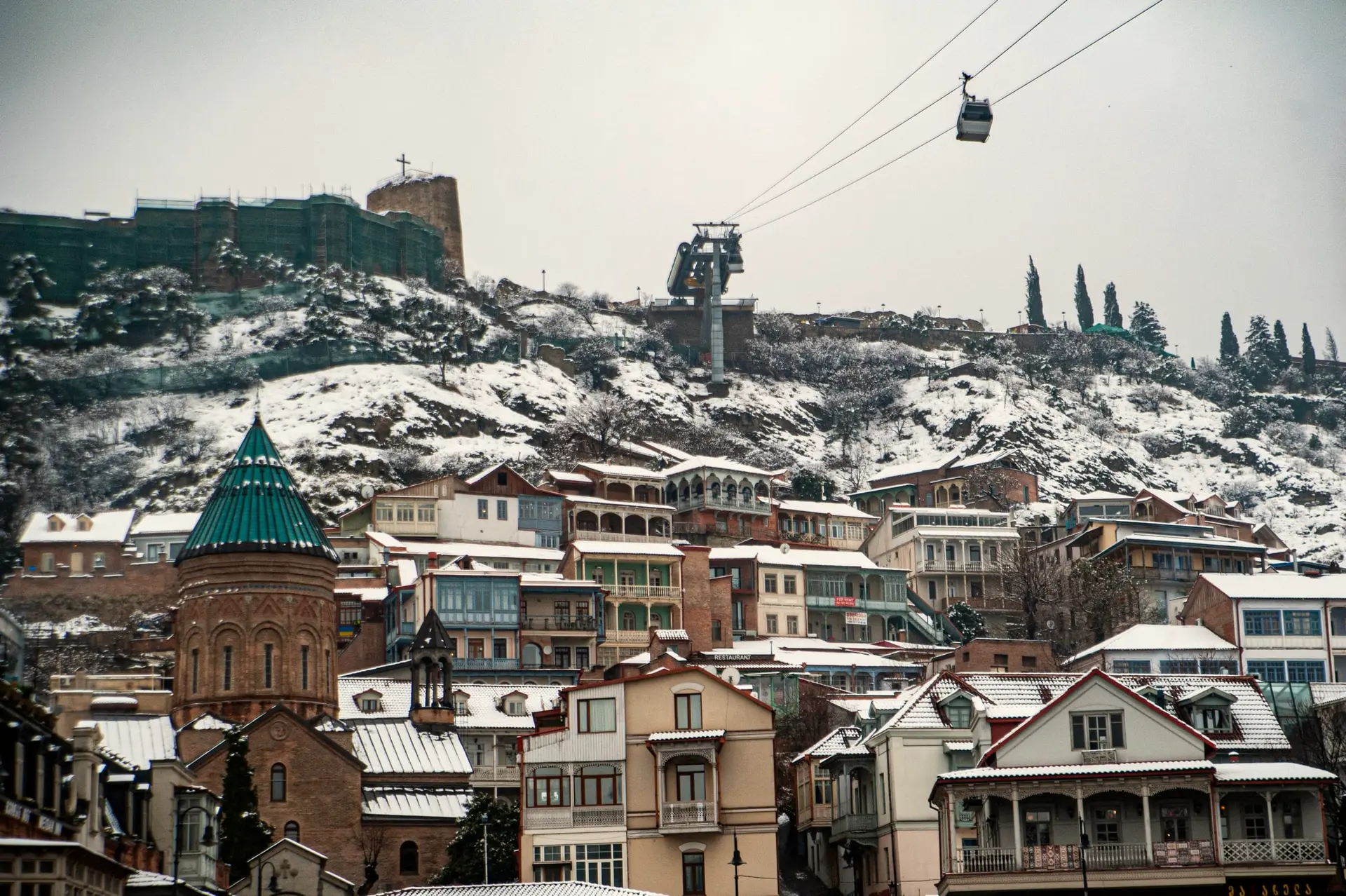 Winter
What to do in Tbilisi in winter
Tbilisi from December to February. Weather, sulphur baths with 2026 prices, museums and theatre for cold days, the New Year market and day trips.11 min read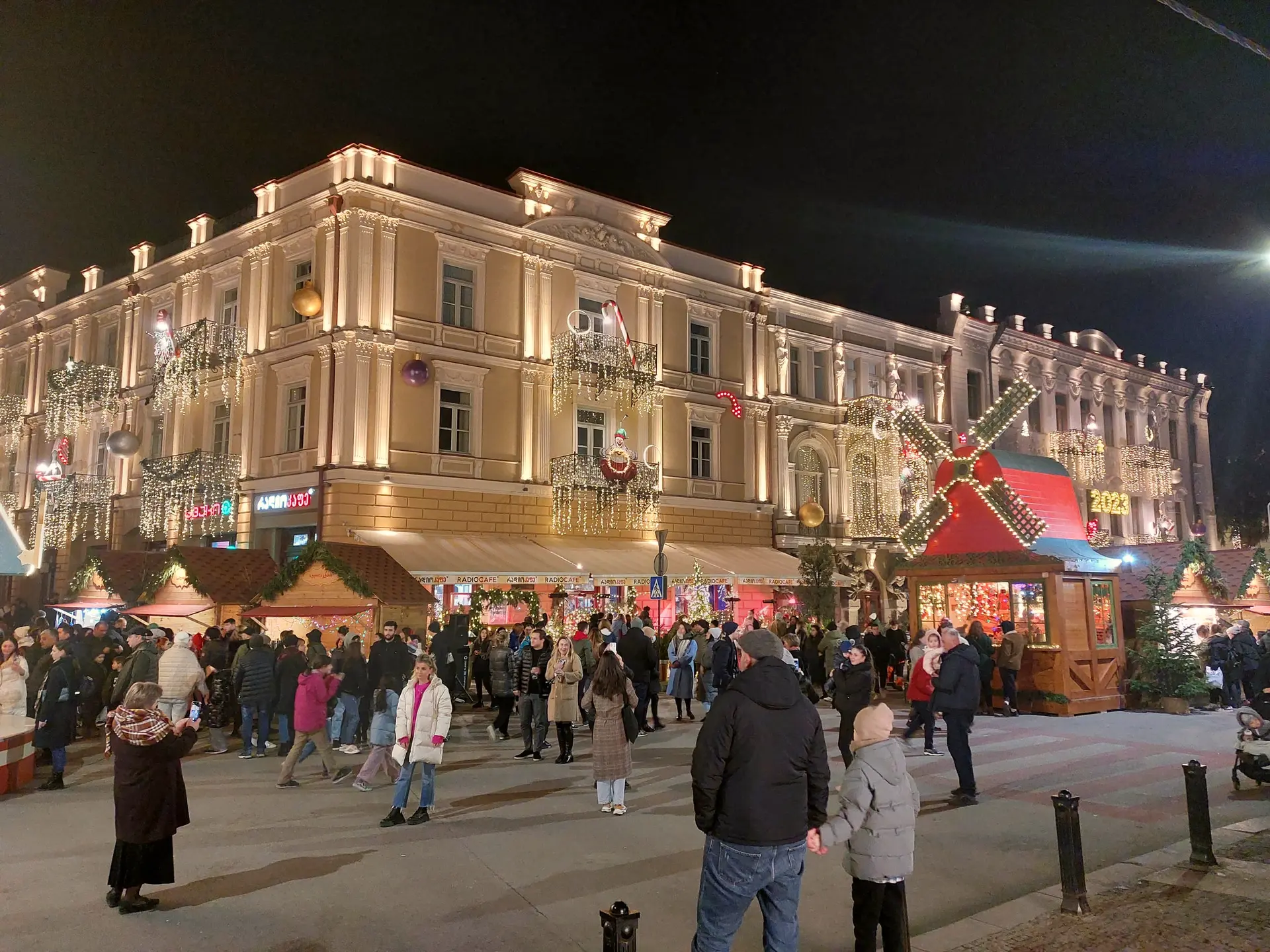 Winter
New Year 2027 in Tbilisi and Georgia
New Year 2027 in Tbilisi, Batumi or a ski resort. The New Year village, fireworks, the free night metro, dinner prices, what is open on 1 and 2 January and Christmas on 7 January.16 min read
Photos: Marcin Konsek (CC BY-SA 4.0).